 By Graham Fisher
Ergo baby carrier accessories are add-ons that change how a soft structured carrier fits, supports, or protects your baby and you. This guide walks through the most common options, explains what each one does, and gives you a simple way to decide which, if any, you actually need. By the end, you should know whether an accessory solves a real fit problem or just adds bulk.
What Ergo Baby Carrier Accessories Usually Include
Most people searching for ergo baby carrier accessories are looking at a short list of add-ons. The exact names and bundles vary by model and by when a product was released, so always check the listing for compatibility before buying. In general, these accessories fall into four groups:
- Infant inserts that add padding and a seat for newborns who are too small for the standard seat.
- Hip and lumbar supports that spread weight or add lower-back comfort for the wearer.
- Covers and bibs that protect the carrier fabric or your baby from drool, sun, and weather.
- Storage and carry items such as pouches or bags that keep the carrier clean and organized between uses.
Some accessories are sold by the manufacturer, while others are third-party products made to fit a range of carriers. Third-party items can work well, but they are not always tested with your specific model, so the manufacturer’s compatibility list is your best reference.
Step 1: Check Whether Your Baby Actually Needs an Insert
The most common reason people reach for an infant accessory is a newborn who seems to slide down or sit too low in the carrier. Before buying anything, check the basics.
- Confirm your baby meets the carrier’s stated minimum weight and height. Manufacturers specify these limits, and they vary between models.
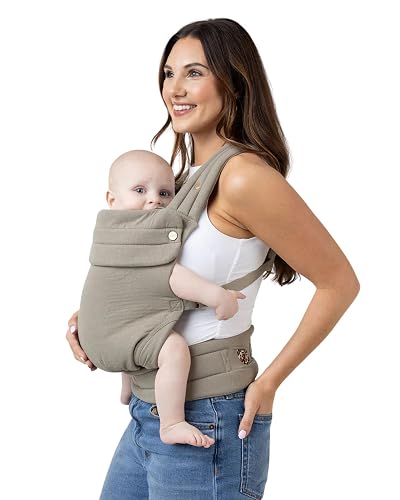
- Check that the baby’s knees sit above the seat bottom, in a natural “M” position, with the seat supporting the back of the thighs.
- Look at the chin. The chin should be off the chest with an open airway. A baby who is slumped or folded forward is a safety concern, not just a comfort issue.
- Note whether the baby’s head and neck are supported. A newborn often needs the infant insert or a different carrier style until neck control develops.
If your baby is at or above the minimum size and fits well in the standard position, you may not need an insert at all. If the baby is below the minimum or sits too deep in the seat, an insert designed for your model is usually the right step. Always follow the manufacturer’s weight and fit guidance, and if you have concerns about your newborn’s breathing or positioning, consult your pediatrician or a certified lactation or infant-care professional.
Step 2: Choose a Hip or Lumbar Support
Hip and lumbar accessories target the wearer’s comfort rather than the baby’s. They are most useful for longer walks, heavier toddlers, or people who carry for several hours a day.
How to Judge a Support
- Look for padding thickness and width. Wider, denser padding spreads load more evenly across the hips.
- Check that the support does not interfere with the carrier’s waist strap or buckle placement.
- Make sure the support is compatible with your model’s strap design. Some add-ons only fit certain belt widths.
A support will not fix a carrier that is badly sized. If you feel strain on your shoulders or neck, the first fix is usually adjusting the straps, not adding padding.
Step 3: Decide on Covers, Bibs and Sun Protection
Covers and bibs are practical for families who carry outdoors or in messy situations. They are generally low-risk accessories, but they must never block the baby’s face or restrict breathing.
| Accessory type | Main benefit | What to check |
|---|---|---|
| Drool or bib cover | Protects carrier fabric from saliva and food | Washable material, does not cover the baby’s nose or mouth |
| Sun or weather cover | Shade and wind protection | Breathable mesh panel, clear view of baby’s face at all times |
| Teething pad | Protects fabric during chewing stages | Removable, machine washable, secure fastening |
| Carrier storage pouch | Keeps the carrier clean and dry | Fits your carrier size, ventilated |
Any cover you add should be fully removable and kept away from the baby’s face during carrying. Never drape fabric over a sleeping baby, and never use a cover as a substitute for proper positioning.
Step 4: Check Compatibility Before You Buy
Compatibility is where most accessory purchases go wrong. Two carriers that look similar can have different strap widths, buckle systems, or seat dimensions.
- Find your exact model name and the year it was released. Model revisions often change dimensions.
- Read the manufacturer’s compatibility list. If the accessory is not named there, assume it is not tested with your carrier.
- Measure the seat width and depth if the listing gives dimensions, and compare them with your carrier’s specs.
- Confirm the accessory’s weight and height range matches your baby’s current size.
Common Mistakes to Avoid
- Buying an infant insert before checking the baby’s actual size and position.
- Assuming a third-party accessory is safe with a carrier it was never designed for.
- Adding so many layers that the baby overheats, especially in warm weather.
- Using a cover or bib in a way that blocks the baby’s airway or view of the face.
- Ignoring the wearer’s posture and strap adjustment in favor of more padding.
- Skipping the washing instructions, which can break down stitching or fabric over time.
Tips for Getting the Most From Your Accessories
- Test any new accessory indoors before taking it on a long walk.
- Re-check fit every few weeks, since babies change size quickly.
- Keep the manufacturer’s manual with the carrier so you can look up weight limits and cleaning rules.
- Buy one accessory at a time so you can judge whether it helps.
Recommended gear
These are general product types that often pair with soft structured carriers. Always confirm compatibility with your specific model.
- Ergo Baby Carrier infant insert adds support for smaller babies who sit low in the standard seat. View on Amazon
- Ergo Baby Carrier bib or drool cover protects the fabric from saliva and food stains during feeding stages. View on Amazon
- Ergo Baby Carrier storage bag keeps the carrier clean and organized when it is not in use. View on Amazon
Related Reading
If you are still deciding which carrier to buy, start with Ergo Baby or Baby Bjorn Carrier (2026): Which Is Better for Daily Use? to compare daily-use fit. For safe positioning, read How to Wear Baby Carrier Safely: A Step-by-Step Guide. If you carry on foot a lot, Walking with Baby Carrier: A Step-by-Step Guide for Comfort and Safety covers comfort tips, and Baby Carrier Types: Structured, Wrap, Ring Sling and Backpack explains how different styles compare.
FAQ
Do I need an infant insert for a newborn?
Not always. Many structured carriers need an insert until the baby reaches a minimum weight and height set by the manufacturer. Check your model’s limits and the baby’s position before deciding.
Are third-party accessories safe to use?
They can be, but only if they are listed as compatible with your carrier model. Without that confirmation, the fit and load-bearing performance are unknown.
Can I machine wash carrier accessories?
Many covers and bibs are machine washable, but check the label. Some padded inserts require hand washing or air drying to keep their shape and support.
Does a hip support make carrying easier?
For many wearers, yes, especially on long walks or with an older baby. It spreads weight across the hips, but it does not replace proper strap adjustment.
Can a cover block my baby’s airflow?
It can if it is placed over the face or made from dense material. Use breathable panels, keep the baby’s face visible, and remove covers in hot weather.
How do I know if the carrier fits my baby correctly?
Check that the baby is high enough to kiss without bending their head forward, that the chin is off the chest, and that the knees are above the seat bottom. Follow the manufacturer’s fit diagram.
When should I stop using an infant insert?
Stop when your baby reaches the upper weight or height limit in the manual, or when the baby fits the standard seat comfortably. Move up gradually and keep checking fit.
Should I talk to a professional before using accessories?
If your baby was born early, has a medical condition, or you have concerns about breathing or positioning, consult your pediatrician or a certified infant-care professional before using any carrier add-on.
Conclusion
Ergo baby carrier accessories can solve real fit and comfort problems, especially for newborns and longer carries. Start by checking your baby’s size and position, then choose only the add-ons that address a specific need. Always confirm compatibility with your exact model and keep your baby’s airway and face clear at all times.
Ready to choose one?
About Graham Fisher
Graham Fisher is part of our editorial team and reviews and edits our baby gear guides, checking product details against manufacturer specifications and owner feedback.









Write Your Review
No reviews yet. Be the first to share your experience!