 By Audrey Hayes
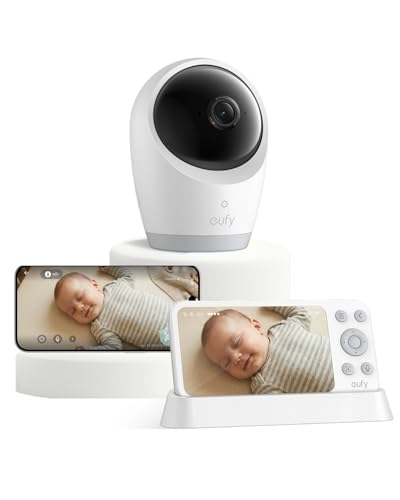
Placing a baby monitor seems straightforward, but the location of the camera and its cord can create a serious safety hazard. The U.S. Consumer Product Safety Commission (CPSC) warns that cords on baby audio and video monitors present a strangulation risk to infants and toddlers when they are within a child’s reach. According to the CPSC’s safety alert, since 2002 seven infants and toddlers were strangled in baby monitor cords and three others nearly strangled. The victims were as young as 6 months and as old as 20 months.
The CPSC and the Juvenile Products Manufacturers Association (JPMA) urge parents to immediately check the location of all monitors and other products with electrical cords, including those mounted on the wall. The key rule: place cords at least three feet away from any part of the crib, bassinet, play yard, or other safe sleep environment. Never position a monitor inside or on the edge of a crib. These guidelines apply to both audio and video monitors, and to any corded device in the nursery. For a deeper look at monitor types, see our guide to baby monitor features.
The 2011 Summer Infant Recall: A Cautionary Example
In February 2011, CPSC and Summer Infant announced a voluntary recall of about 1.7 million video baby monitors with electrical cords. The recall was prompted by two strangulation deaths. In March 2010, a 10-month-old girl in Washington, D.C., died after the cord of a Summer Infant video monitor, which had been placed on top of the crib rail, became wrapped around her neck. In November 2010, a 6-month-old boy in South Carolina died when he became entangled in the cord of a monitor placed on a changing table attached to the crib. CPSC also reported a near-strangulation incident involving a 20-month-old boy whose camera was mounted on the wall, but he was still able to reach the cord.
The recall did not remove the monitors from homes; instead, Summer Infant provided new on-product warning labels and revised instructions to help caregivers place the camera and cord safely. CPSC and Summer Infant urged parents to immediately check the location of the video monitors, including cameras mounted on the wall, and all electric cords, to make sure the cords are out of arm’s reach of their child. If you are considering a video monitor, our article on Wi-Fi vs non-Wi-Fi baby monitors explains connectivity and privacy trade-offs.
Other Cords Near the Crib: Window Coverings and More
Monitor cords are not the only strangulation risk in a nursery. The CPSC also warns about window covering cords. From 2014 to 2019, 46 deaths related to window covering cord strangulation were reported to the agency, an average of about eight children per year. CPSC recommends buying and installing cordless window coverings, and if that is not possible, eliminating dangling cords, keeping all cords out of children’s reach, and moving cribs, beds, and furniture away from windows. The Nemours KidsHealth crib safety guide echoes this advice: there should be no cords from drapes or window shades anywhere near the crib or within the baby’s reach.
The CPSC and JPMA alert is not limited to monitors: it asks parents to check the location of all monitors and other products with electrical cords, including those mounted on the wall, to make sure the cords are out of a child’s reach. For more on creating a safer nursery, visit our baby safety section and our guide to window safety for kids.
What Baby Monitors Can and Cannot Do: AAP Guidance
Many parents assume that a baby monitor adds a layer of safety, but the American Academy of Pediatrics (AAP) clarifies that monitors are not a tool for preventing sudden infant death syndrome (SIDS). In its safe sleep recommendations, the AAP states that there is no evidence that home cardiorespiratory monitors, including wearable heart rate and pulse oximetry devices, decrease the risk of SIDS. The AAP advises parents not to rely on these consumer wellness devices as a substitute for following safe sleep guidelines.
The AAP does recommend room sharing, keeping the baby’s sleep area in the same room where parents sleep for at least the first six months, because it can decrease the risk of SIDS by as much as 50%. About consumer wellness monitors, the AAP says it is fine to use one if you want to, but not as a substitute for the safe sleep guidelines, and not to let it give you a false sense of security. Always place your baby on their back to sleep, use a firm, flat mattress with a fitted sheet, and keep soft objects and loose bedding out of the crib. For more on safe sleep spaces, see our crib safety standards article.
Safe Placement at a Glance
| Placement | OK or Avoid | Why |
|---|---|---|
| Inside the crib | Avoid | CPSC safety alert: never position a monitor inside or on the edge of a crib. |
| On the crib rail | Avoid | 2011 recall: a death occurred when a camera was placed on top of the crib rail. |
| On a changing table attached to the crib | Avoid | 2011 recall: a death involved a monitor on a changing table attached to the crib. |
| On a wall within 3 feet of the crib | Avoid | CPSC says place cords at least three feet away from any part of the crib. |
| On a wall more than 3 feet away, but cord hangs within reach | Avoid | 2011 recall: a near-strangulation occurred when a wall-mounted camera cord was still reachable by a 20-month-old. |
| On a wall more than 3 feet away, cord secured and out of reach | OK | CPSC: at least three feet away is where your monitor should stay; check that cords are out of child’s reach. |
The CPSC’s 20-month-old near-strangulation case shows why the check is not one-time: the camera was on the wall, yet the child could still reach the cord. Check the placement of every corded product, as the CPSC urges, and look again if you move the crib or the monitor.
Frequently asked questions
Can a baby monitor prevent SIDS?
No. The American Academy of Pediatrics states that there is no evidence that home cardiorespiratory monitors, including consumer wellness devices, decrease the risk of SIDS. A monitor can help you hear or see your baby, but it is not a substitute for safe sleep practices such as placing your baby on their back, using a firm sleep surface, and room sharing for at least the first six months.
How far should the monitor be from the crib?
The CPSC and JPMA recommend placing all monitor cords at least three feet away from any part of the crib, bassinet, or play yard. They add: never position a monitor inside or on the edge of a crib.
What if my monitor is mounted on the wall?
Even wall-mounted monitors can be dangerous if the cord hangs within a child’s reach. The CPSC’s 2011 recall included a near-strangulation incident where a wall-mounted camera cord was still accessible to a 20-month-old. Keep the cord at least three feet from any part of the crib and out of your child’s reach.
For more guidance on choosing and using baby monitors safely, visit our baby monitors guide. You can also explore our articles on crib safety standards and window safety for kids to create a safer nursery.
Sources
- CPSC Safety Alert: Infants and Toddlers Can Strangle in Baby Monitor Cords
- CPSC: Two Strangulation Deaths Prompt Recall of Video Baby Monitors with Cords (2011)
- CPSC: Go Cordless with Window Coverings (2021)
- Nemours KidsHealth: Crib Safety
- HealthyChildren.org (AAP): How to Keep Your Sleeping Baby Safe
About Audrey Hayes
Audrey Hayes is part of our editorial team and reviews and edits our baby gear guides, checking product details against manufacturer specifications and owner feedback.