 By Audrey Hayes
Baby monitors give parents a way to keep tabs on their child from another room. They come in several forms: simple audio devices, video cameras, internet-connected cameras, and wearable sensors that claim to track vital signs. Understanding what each type does, and the safety trade-offs that come with it, can help you pick a setup that fits your family. No monitor replaces safe sleep habits or attentive care, but the right features can make day-to-day parenting a little easier.
Monitor features at a glance
| Feature | What it does | Caution |
|---|---|---|
| Audio monitoring | Lets you hear sounds from the nursery, such as crying, from another room (Children’s Hospital of Philadelphia). | Corded audio monitors require careful placement to avoid strangulation (CPSC). |
| Video monitoring | Shows a live image of your baby’s crib so you can see what they are doing (CHOP). | Same cord safety rules apply; if the camera connects to Wi-Fi, security steps are needed (NCSC). |
| Wi-Fi connectivity | Allows you to view the camera feed remotely, receive alerts, and sometimes record footage (NCSC). | Default passwords can let unauthorized users access the feed; change the password and keep software updated (NCSC). |
| Vital sign sensors | Wearable or contactless sensors that estimate heart rate, oxygen saturation, breathing rate, or temperature (FDA, CHOP). | Many over-the-counter models lack FDA authorization and may give inaccurate readings, leading to false alarms or missed problems (FDA, CHOP). |
| Electrical cord | Powers many audio and video monitors. | Cords within a child’s reach pose a strangulation hazard; keep cords at least three feet from the crib (CPSC). |
Audio and video monitors
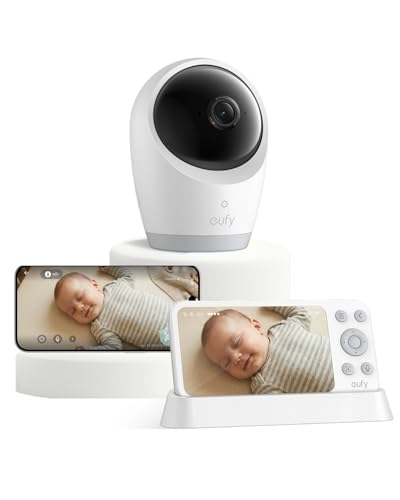
According to the Children’s Hospital of Philadelphia, typical baby monitors let parents hear if a baby is crying from another room or see what they are doing in their crib. Audio-only monitors transmit sound, while video monitors add a camera that shows a live image. The CPSC warns that cords on both audio and video monitors present a strangulation hazard when placed within a child’s reach, so cord safety is a must. For a closer look at the differences, see our guide on audio vs video baby monitors. And because any corded device can become a hazard, always follow the placement rules covered in our baby monitor placement and cord safety article.
Connected camera monitors and security
Many video monitors connect to your home Wi-Fi, letting you watch a live feed, get alerts, and sometimes record footage while you are away. The UK National Cyber Security Centre (NCSC) explains that these smart cameras can, in rare cases, be accessed by unauthorized users if they still use the default password set by the manufacturer. The NCSC recommends changing that password to a secure one, such as three random words you can remember, and keeping the camera’s software (often called firmware) updated. If you do not need to view the camera remotely, the NCSC suggests disabling that feature. You should also check your router settings: disabling UPnP and port forwarding can reduce the risk of someone reaching the camera from outside your home. For step-by-step advice, read our guide on how to secure a Wi-Fi baby monitor. If you are weighing whether a connected monitor is right for you, see Wi-Fi vs non-Wi-Fi baby monitors.
Vital sign and movement monitors
Some monitors go beyond sound and video, using sensors built into socks, leg bands, onesies, or clips to estimate a baby’s heart rate, oxygen saturation, breathing rate, or temperature. The U.S. Food and Drug Administration (FDA) warns that many of these over-the-counter devices do not have FDA marketing authorization, meaning their safety and effectiveness have not been evaluated. Inaccurate readings could lead to unnecessary medical visits or, conversely, fail to detect a change in condition. The FDA recommends looking for an FDA-authorized device (product code QYU) if medical monitoring is truly needed, and it states that no device has been authorized to prevent SIDS or SUID.
Research from the Children’s Hospital of Philadelphia (CHOP) found serious concerns with the accuracy of consumer vital sign monitors. Dr. Chris Bonafide’s study showed that these devices often trigger unwarranted alarms that land families in the emergency room unnecessarily. The American Academy of Pediatrics (AAP) also cautions against home cardiorespiratory monitors, noting there is no evidence they reduce the risk of SIDS. For babies with serious heart or lung conditions, CHOP points out that hospital-grade, FDA-cleared monitors prescribed by a pediatrician are available. If you choose to use a consumer monitor, Dr. Bonafide urges parents to have an open conversation with their pediatrician about the device’s limits and to agree on a plan for responding to alarms. For more on keeping your baby safe, visit our baby safety section.
Cord safety for any monitor
The U.S. Consumer Product Safety Commission (CPSC) and the Juvenile Products Manufacturers Association (JPMA) warn that cords on baby audio and video monitors present a strangulation hazard. Since 2002, seven infants and toddlers have died after being strangled by monitor cords, and three more nearly strangled. The victims ranged from 6 months to 20 months old. The CPSC and JPMA urge parents to immediately check the location of all monitors with electrical cords, including those mounted on the wall. Cords should be placed at least three feet away from any part of the crib, bassinet, play yard, or other safe sleep space. Never position a monitor inside or on the edge of a crib. Our baby monitor placement and cord safety guide walks through these steps in detail.
How to choose a monitor
Start by deciding which features matter most for your home. If you only need to hear your baby, an audio monitor may be enough. A video monitor adds a visual check, and a Wi-Fi model lets you peek in from another location, but it requires the security steps outlined by the NCSC. Avoid monitors that claim to measure vital signs unless they are FDA-authorized and recommended by your pediatrician. No matter which type you pick, always follow cord safety rules and remember that a monitor is not a substitute for safe sleep practices. The AAP recommends room sharing for at least the first six months, placing your baby on their back for all naps and at night, and keeping the crib free of loose bedding. For more help narrowing your options, browse our baby monitors category page.
Frequently asked questions
Can a baby monitor prevent SIDS?
No. The FDA states that no devices, including infant monitors, have been authorized to prevent SIDS or SUID. The AAP also advises that home cardiorespiratory monitors do not reduce the risk of SIDS, and they should not be used for that purpose.
Are Wi-Fi baby monitors safe from hackers?
They can be vulnerable if left with default settings. The NCSC explains that cyber criminals can access a camera remotely if the default password is not changed. Securing the monitor with a strong, unique password, keeping its software updated, and disabling remote access when it is not needed all make it much harder for unauthorized users to get in.
How far should a monitor cord be from the crib?
The CPSC and JPMA say cords must be placed at least three feet away from any part of the crib, bassinet, play yard, or other safe sleep environment. Never put a monitor inside or on the edge of the crib.
For more guidance on choosing and using baby monitors, see our baby monitors category page.
Sources
- UK National Cyber Security Centre: Smart Security Cameras, Using Them Safely in Your Home
- FDA Safety Communication: Do Not Use Unauthorized Infant Devices for Monitoring Vital Signs
- Children’s Hospital of Philadelphia: Do Vital Sign Baby Monitors Work? Research Says, Beware
- CPSC Safety Alert: Infants and Toddlers Can Strangle in Baby Monitor Cords
- HealthyChildren.org (AAP): How to Keep Your Sleeping Baby Safe
About Audrey Hayes
Audrey Hayes is part of our editorial team and reviews and edits our baby gear guides, checking product details against manufacturer specifications and owner feedback.