 By Audrey Hayes
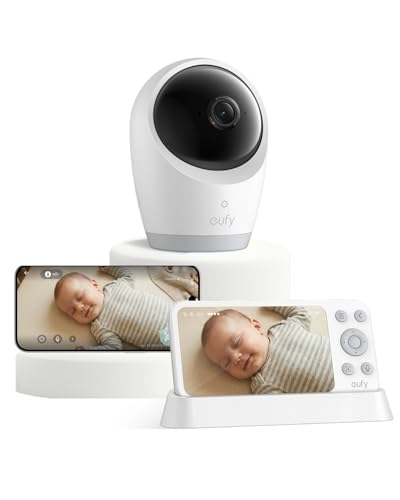
When you are deciding between an audio and a video baby monitor, the choice often comes down to whether you want to hear your baby or see them as well. An audio monitor lets you listen for cries from another room, while a video monitor adds a camera feed so you can check on your child without entering the room. Both types can help you stay aware of your baby’s sounds and movements, but neither type is a safety device. Understanding what a monitor can and cannot do, and how to use one safely, matters more than the specific style you pick.
What a Baby Monitor Can and Cannot Do
Baby monitors are designed to alert you when your child needs attention. According to the Children’s Hospital of Philadelphia (CHOP), typical monitors let parents hear if a baby is crying or see what they are doing in their crib. That is the core job of an audio or video monitor, and it can give you peace of mind while you are in another part of the home.
However, monitors do not make a sleeping baby safer. The American Academy of Pediatrics (AAP) cautions that home cardiorespiratory monitors, including consumer wellness devices that track heart rate or oxygen levels, have no evidence showing they decrease the risk of sudden infant death syndrome (SIDS). The AAP’s safe sleep guidance states clearly that these devices should not be used as a substitute for following safe sleep practices.
Some monitors go beyond sound and video by claiming to measure vital signs such as respiration, pulse rate, and blood-oxygen levels. CHOP researchers, led by Dr. Chris Bonafide, studied these physiological monitors and found serious concerns with their accuracy. The study showed that the devices often trigger unwarranted alarms that land families in the emergency room unnecessarily. Dr. Bonafide explains that monitoring vital signs of healthy infants at home is not necessary and can lead to false positive alarms, which may cause undue concern and increase the risk of overdiagnosis.
The U.S. Food and Drug Administration (FDA) has also weighed in. In a safety communication, the FDA warns that many infant monitors sold over the counter for vital sign monitoring do not have FDA marketing authorization. That means the agency has not evaluated their safety and effectiveness. The FDA states that inaccurate measurements from unauthorized devices can lead to unnecessary medical care, and these devices may fail to detect changes in a baby’s condition. The FDA is not aware of any clinical or scientific evidence that currently available baby products prevent or reduce the chance of SIDS. If medical care depends on accurate monitoring, the FDA recommends talking to your health care provider about an appropriate FDA-authorized device, which will have the product code QYU in the FDA’s databases.
Cord Safety: The Three-Foot Rule
One of the most serious risks with any corded monitor is strangulation. The U.S. Consumer Product Safety Commission (CPSC) warns that cords on baby audio and video monitors present a strangulation hazard to infants and toddlers when placed within a child’s reach. Since 2002, seven infants and toddlers have died after becoming entangled in monitor cords, and three others nearly strangled. The victims ranged from 6 months old to 20 months old.
The CPSC and the Juvenile Products Manufacturers Association (JPMA) urge parents to place all monitor cords at least three feet away from any part of the crib, bassinet, play yard, or other safe sleep environment. The rule applies even to cameras mounted on the wall, because a child may still be able to reach the cord. The CPSC’s safety alert reminds caregivers: “At least three feet away is where your monitor should stay.” Never position a monitor inside or on the edge of a crib.
A 2011 recall of about 1.7 million Summer Infant video baby monitors highlighted the danger. The CPSC reported two strangulation deaths involving those monitors: a 10-month-old girl whose camera had been placed on the crib rail, and a 6-month-old boy whose monitor was on a changing table attached to the crib. A near-strangulation also occurred with a 20-month-old boy who reached the cord of a wall-mounted camera. The recall provided new on-product warning labels and revised instructions to help parents keep cords out of reach. For more on safe placement, see our guide on baby monitor placement and cord safety.
Privacy and Connected Monitors
Many video monitors connect to your home Wi-Fi so you can view a live feed on your smartphone. The UK National Cyber Security Centre (NCSC) explains that live feeds or images from smart cameras can, in rare cases, be accessed by unauthorized users, putting your privacy at risk. This can happen because some cameras are shipped with a default password set by the manufacturer, which is often well-known or guessable, such as “admin” or “00000.” Cyber criminals can use these passwords to access the camera remotely. A related read: Manduca Baby Carrier vs Tula: Which Fits Your Baby and Body Best?.
The NCSC recommends changing the default password to a secure one, ideally made of three random words. You should also keep the camera’s software updated, and if the option is available, switch on automatic updates. If you do not need the feature that lets you remotely view camera footage over the internet, the NCSC advises disabling it. Additionally, the NCSC suggests checking your router settings and considering disabling UPnP and port forwarding, which can be exploited to access devices on your network. These steps apply to any internet-connected baby monitor. For a deeper look at the differences between connected and non-connected models, read our article on Wi-Fi vs Non-Wi-Fi Baby Monitors and our guide on how to secure a Wi-Fi baby monitor.
Safe Sleep Practices That Matter More Than Any Monitor
No monitor can replace a safe sleep environment. The AAP’s recommendations, based on the latest evidence, are the most effective way to reduce the risk of sleep-related infant deaths. The AAP advises placing your baby on their back for all naps and at night, on a firm, flat sleep surface that meets CPSC safety standards. The sleep area should be free of soft objects and loose bedding, including pillows, blankets, bumper pads, and toys. Instead of bed sharing, the AAP recommends room sharing for at least the first six months, which can decrease the risk of SIDS by as much as 50% and makes feeding and monitoring easier.
Other protective steps include breastfeeding, offering a pacifier at nap time and bedtime, avoiding smoke and nicotine exposure, and attending all well-child visits. The AAP also cautions against using products that claim to reduce the risk of SIDS, because there is no evidence that they work. A monitor can be a useful tool for keeping an ear or eye on your baby, but it is the safe sleep habits that truly protect your child. For more on creating a safe nursery, see our baby safety section and our article on crib safety standards.
Monitor Types at a Glance
| Monitor type | What it gives you | Key cautions |
|---|---|---|
| Audio monitor | Lets you hear if your baby is crying from another room (CHOP). | Corded models present a strangulation hazard if the cord is within a child’s reach; keep cords at least three feet from the crib (CPSC). |
| Video monitor | Lets you see and hear what your baby is doing in the crib, often via a handheld device (CHOP, CPSC recall notice). | Same cord strangulation risk as audio monitors (CPSC). If the camera connects to Wi-Fi, default passwords can allow unauthorized access to the live feed (NCSC). |
| Vital sign monitor | Uses sensors in socks, bands, or clips to measure respiration, pulse rate, and blood-oxygen levels and sends alerts to a smartphone (CHOP). | Not shown to prevent SIDS (AAP, FDA). Many lack FDA marketing authorization and can produce inaccurate measurements and false alarms that lead to unnecessary emergency visits (CHOP, FDA). |
Frequently asked questions
Do baby monitors prevent SIDS?
No. The American Academy of Pediatrics states that there is no evidence that home cardiorespiratory monitors or consumer wellness devices decrease the risk of SIDS. The FDA also says it is not aware of any clinical or scientific evidence that currently available baby products prevent or reduce the chance of SIDS. Safe sleep practices, not a monitor, are what reduce risk.
How far should a monitor cord be from the crib?
The CPSC and JPMA recommend placing all monitor cords at least three feet away from any part of the crib, bassinet, play yard, or other safe sleep environment. This applies to cords from cameras mounted on the wall as well, because a child may still be able to reach them.
Are vital sign monitors safe for healthy babies?
According to CHOP researchers, monitoring the vital signs of healthy infants at home is not necessary and can lead to false positive alarms and unnecessary medical visits. The FDA warns that many over-the-counter vital sign monitors have not been evaluated by the agency for safety and effectiveness, and inaccurate readings could delay treatment or cause unwarranted interventions. If you choose to use one, CHOP’s Dr. Bonafide suggests talking with your doctor and agreeing on a plan for how to respond when the alarms go off.
For more guidance on choosing and using monitors safely, visit our baby monitors category page.
Sources
- CPSC Safety Alert: Infants and Toddlers Can Strangle in Baby Monitor Cords
- CPSC: Two Strangulation Deaths Prompt Recall of Video Baby Monitors with Cords (2011)
- Children’s Hospital of Philadelphia: Do Vital Sign Baby Monitors Work?
- FDA Safety Communication: Do Not Use Unauthorized Infant Devices for Monitoring Vital Signs
- UK National Cyber Security Centre: Smart Security Cameras, Using Them Safely in Your Home
- HealthyChildren.org (AAP): How to Keep Your Sleeping Baby Safe
About Audrey Hayes
Audrey Hayes is part of our editorial team and reviews and edits our baby gear guides, checking product details against manufacturer specifications and owner feedback.