 By Graham Fisher
Tula baby carrier sizes are based on the wearer’s body measurements and the carrier’s panel length, not on a single size chart you can read off a label. In this guide, you will learn how Tula sizing is structured, how to measure yourself and your baby, how to compare panel and strap dimensions, and how to test fit before you commit to a carrier. By the end, you should be able to narrow your options to one or two sizes with confidence.
How Tula Sizing Works
Tula carriers are built as soft structured carriers with adjustable buckles at the waist and shoulders. Unlike a fixed-size garment, the carrier’s size is mostly determined by how far the waist belt and shoulder straps can extend, plus the length of the seat panel. Most Tula designs are marketed in a standard size range that covers a wide span of adult torso and waist measurements, with separate guidance for plus-size and extended-size options in some lines.
Because the adjustments do a lot of the work, two parents who wear the same size shirt can need different carrier setups. Shoulder width, torso length, hip width and the distance from your waist to your chest all affect how the carrier sits. That is why the sizing approach below focuses on measurements and fit checks rather than a single label.
What the Size Label Actually Covers
The size you see on a Tula carrier usually reflects the range of wearer body dimensions the design is meant to accommodate. Manufacturers typically publish a fit range in inches or centimeters, and they note the recommended child age or weight range for the seat. Always check the current product page for the exact numbers, since specifications can change between production runs.
Why Adjustability Matters More Than the Label
Buckles, webbing length and panel width determine whether the carrier distributes weight across your hips or pulls on your shoulders. A carrier that is slightly too big can often be tightened. A carrier that is too small cannot be lengthened past its design limits, which is why measuring first saves time and frustration.
Step 1: Measure Yourself Before Choosing a Size
Start with a soft measuring tape and a helper if possible. Stand in relaxed everyday clothing, not bulky layers, and record the following numbers in inches or centimeters.
- Waist circumference: measured at the natural waistline, usually just above the belly button.
- Hip circumference: measured around the widest part of your hips and seat.
- Chest or bust circumference: measured across the fullest part, keeping the tape level.
- Shoulder-to-waist length: measured from the top of the shoulder down the back to the natural waistline.
- Shoulder width: measured from one shoulder point to the other across the upper back.
Write these down and compare them to the fit range listed for each Tula size. If your numbers fall between two sizes, consider the adjustment range before choosing the larger or smaller option.
Tips for Accurate Body Measurements
- Measure over a thin layer of clothing, not a heavy coat.
- Keep the tape snug but not compressing your skin.
- Take each measurement twice and use the average.
- Re-measure if your body has changed recently, such as after pregnancy or a change in weight.
Step 2: Measure Your Baby for Age and Size Fit
Tula carriers are designed for a specific age and weight window, and a carrier can fit your body well but still be unsafe for an infant who is too small or too large for that seat. Check the product’s recommended child range, then compare it to your baby’s current weight and length. Newborns may need an insert or a different carrier entirely, so review the product instructions carefully.
Pay attention to head and neck support. A baby should have adequate head control before being worn in a forward-facing or any upright position. The seat should keep the baby’s knees above their bottom and the spine in a natural curve. If you are unsure whether your baby’s size and development meet the carrier’s guidance, consult a pediatrician or a certified carrier fit specialist before using it.
Step 3: Compare Panel and Strap Dimensions
Once you have your measurements, compare them to the carrier’s published dimensions. The following table shows the types of specifications to look for. Always confirm exact figures on the current manufacturer page.
| Specification | What It Tells You | How to Use It |
|---|---|---|
| Waist belt range | Minimum and maximum waist fit | Compare to your waist circumference, leaving room to tighten |
| Shoulder strap length | How far straps extend | Check against your shoulder-to-waist length |
| Seat panel width | Support for the baby’s legs and hips | Compare to your baby’s hip-to-knee length |
| Recommended child weight | Safe use window | Confirm your baby falls within the stated range |
| Carrier fit range (adult) | Overall wearer fit | Match to your overall body measurements |
Reading Fit Ranges Correctly
A carrier with a broad waist range can work for more body types, but very wide ranges may also mean less customization at the extremes. If your measurements sit near the bottom or top of a range, test the carrier before committing, and make sure you can still achieve a snug, balanced fit with the buckles in the middle of their adjustment.
Step 4: Test the Fit Before Wearing It With Your Baby
Once you have a carrier in hand, run a fit check with a bag or a doll of similar weight. Follow the manufacturer’s diagram for buckling and adjustment, then work through these checks.
- Fasten the waist belt so it sits on your hips, not your stomach or ribs.
- Adjust the shoulder straps so the carrier sits high on your back and the fabric does not gap.
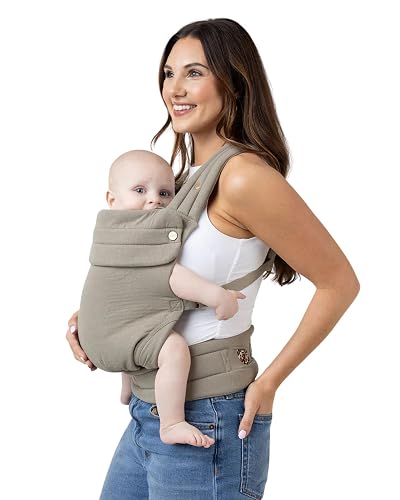
- Check that the seat panel reaches from knee to knee, with the baby’s knees above their bottom.
- Bend forward, squat and walk around to see whether the carrier shifts or pinches.
- Look in a mirror to confirm the straps lie flat and the panel is centered.
If the waist belt rides up, the carrier may be too big in the torso or the straps are too loose. If the shoulder straps dig in or the baby slumps, the carrier may be too small or the adjustments are not set correctly.
Common Mistakes When Choosing a Tula Size
- Buying by clothing size alone. Body shape matters more than the number on a shirt tag.
- Skipping the waist measurement. The waist belt does most of the load-bearing work.
- Ignoring the child’s age and weight range. A carrier that fits you may not suit your baby yet.
- Tightening straps too much. This can cause shoulder pain and push the baby forward unsafely.
- Assuming a larger size is always safer. Loose fit can shift the baby and reduce support.
- Not testing before the first real outing. Run through a fit check at home first.
Tips for Getting a Comfortable Fit
- Keep the carrier’s buckles in the middle of their range when you first set it up, so you have room to adjust in either direction.
- Re-check fit after each wash, since fabric can relax slightly.
- Adjust the carrier each time another person wears it, and note the settings you like for quick changes.
- If you have a larger frame or unusual proportions, read owner reviews from wearers with similar measurements, and look for guides aimed at bigger bodies.
Recommended gear
A few supporting items can make fitting easier and more accurate.
- Flexible measuring tape: a soft sewing-style tape gives more accurate waist, hip and chest readings than a rigid ruler. View on Amazon
- Weighted doll or training weight: helps you test how the carrier feels at a similar load before using it with your baby. View on Amazon
- Full-length mirror: lets you check strap placement and panel alignment from the front and back. View on Amazon
Related Reading
If you are comparing specific models, start with Tula Baby Carrier Comparison: Which Tula Baby Carrier Is Best for You? for a side-by-side look at design differences. Plus-size wearers may find 9 Best Tula Baby Carrier Plus Size Mom Options for Comfort and Fit (2026) useful, and parents comparing across brands can review 8 Best Baby Carriers for Plus Size: 8 Picks Compared for Bigger Parents (2026). For safe setup once you have chosen a size, see How to Wear Baby Carrier Safely: A Step-by-Step Guide.
FAQ
Are Tula carrier sizes the same as clothing sizes?
No. Tula sizes reflect body measurements and adjustment range, so a clothing size is only a rough guide. Measure your waist, hips, chest and shoulder-to-waist length and compare them to the published fit range.
Can one Tula carrier fit both parents?
Often yes, because the buckles and straps adjust for different body shapes. Check that both wearers fall within the stated fit range, and re-adjust the carrier each time someone else puts it on.
How do I know if a Tula carrier is too big?
Signs include a waist belt that rides up, shoulder straps that sit loose, and a baby who shifts or slumps. Tighten the adjustments first. If the carrier still does not hold its position, it may be the wrong size.
What if my measurements fall between two sizes?
Consider the adjustment range of each option, and check whether you can achieve a snug, centered fit with the buckles in the middle of their range. If you are still unsure, test both options if possible before choosing.
Does baby’s weight affect which carrier size I need?
Baby’s weight and age determine whether a carrier is safe to use, but they do not change your body size fit. Confirm the child range on the product page and make sure your baby meets the minimum weight and head control guidance.
Should I measure myself while pregnant or after pregnancy?
Measure at the time you plan to use the carrier. Body measurements can change during pregnancy and in the months after birth, so re-measure if you are buying during or shortly after those periods.
What if the carrier still feels uncomfortable after adjusting it?
Check the placement of the waist belt, the height of the shoulder straps, and the seat panel position. If discomfort continues, consult a certified carrier fit specialist or a healthcare provider, especially if you have back, hip or shoulder concerns.
Is a larger Tula carrier safer for a growing baby?
Not necessarily. A carrier that is too large can allow the baby to slump or shift, which reduces support. Choose a size that fits you well and matches your baby’s current weight and development, then follow the manufacturer’s guidance as your child grows.
Conclusion
Tula baby carrier sizes depend on your body measurements, the carrier’s adjustment range and your baby’s age and weight. Measure your waist, hips, chest and shoulder-to-waist length, compare them to the published fit specifications, and run a test fit before wearing the carrier with your child. Taking these steps will help you choose a comfortable, well-fitting carrier that works for your daily routine.
Ready to choose one?
About Graham Fisher
Graham Fisher is part of our editorial team and reviews and edits our baby gear guides, checking product details against manufacturer specifications and owner feedback.






Write Your Review
No reviews yet. Be the first to share your experience!