 By Graham Fisher
Choosing between the Baby Bjorn Carrier Free and the Baby Bjorn Carrier One Air comes down to a few practical questions: how much your baby weighs, how long you plan to wear them, whether you need hip support for a toddler, and how hot your climate gets. Both are soft structured carriers from the same brand, so they share a familiar design language, but they differ in mesh, padding, adjustment range and the way the waist and shoulder straps are built. This guide compares the two side by side and lists the criteria we used, so you can match the carrier to your daily routine rather than to a headline.
Our Top Picks
Selection criteria
We compared the carriers using manufacturer specifications, brand reputation for infant carriers, and patterns that appear repeatedly in owner feedback. We did not test these products ourselves. The criteria were: weight and age range, carry positions, fabric and ventilation, padding and strap design, ease of adjustment, and how each carrier handles a growing child. The list below includes the two Baby Bjorn models at the center of this comparison plus six alternatives from other respected brands, ordered by how closely each one fits the needs of a parent who is weighing these two options.
Quick Comparison
| Product | Best for | Key feature |
|---|---|---|
| Baby Bjorn Carrier One Air | Warm climates and parents who want a breathable, lightweight carrier | Mesh panels for airflow |
| Baby Bjorn Carrier Free | Everyday wear from newborn to toddler with a more traditional fabric feel | Adjustable multi-position carry |
| Ergobaby Omni Breeze | Parents who want a mesh carrier with broad size range | Lightweight mesh body with hip-friendly seat |
| Tula Standard Carrier | Parents who prioritize padding and a wide seat for longer wear | Wide seat and generous waist belt |
| Lillebaby Complete All Seasons | Parents who want six carry positions and a more structured fit | Multiple carry positions with a built-in hood |
| Ergobaby Embrace | Newborns and smaller babies who need a snug, supported fit | Newborn insert and padded head support |
| Infantino Flip Advanced | Budget-conscious parents who want a convertible, front and back carry | Convertible design with a simple buckle system |
| BabyBjorn Baby Carrier Mini | Smaller frames and parents who want a compact everyday carrier | Compact fit with a narrower seat |
Baby Bjorn Carrier One Air
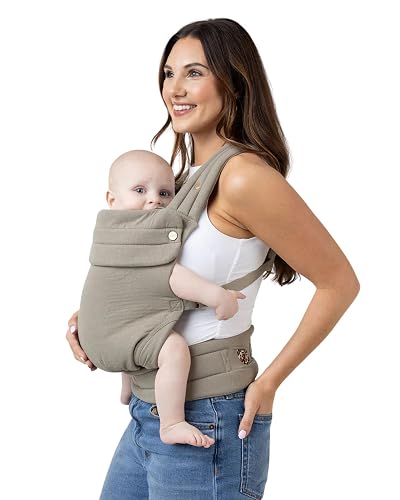
This carrier suits parents who will wear their baby in warm weather, during summer walks or on longer outings where a sweaty back is a real problem. The mesh panels are the defining feature and the main reason many buyers choose it over a heavier cotton model.
Key specs
- Designed for infants from about 7 lb up to roughly 33 lb, according to manufacturer guidance
- Front-facing-in and front-facing-out carry positions
- Mesh panels on the body for ventilation
- Adjustable shoulder straps and waist belt
Pros
- Mesh body keeps airflow on your back and the baby’s back higher than solid fabric
- Lightweight, so it feels less bulky when packed into a bag
- Simple buckle system that most owners find quick to learn
Cons
- Mesh can feel less cushioned on the shoulders during long walks
- Some owners find the waist belt less supportive once a toddler is heavier
Baby Bjorn Carrier Free
The Free is built for parents who want one carrier for most of the baby’s first two years and who prefer a fabric body with a traditional feel. It is a reasonable choice for a parent who expects to carry through the cooler months and into the toddler stage.
Key specs
- Manufacturer-listed use from newborn (with appropriate fit) through toddler weight ranges
- Multiple carry positions, including front and hip options on many configurations
- Padded shoulder straps and a structured waist belt
- Fabric body rather than full mesh
Pros
- Fabric body gives a firmer, more supportive feel for heavier babies
- Padded straps tend to distribute weight more comfortably over longer carries
- Suits parents who want a carrier that holds its shape well
Cons
- Less breathable than mesh in hot or humid conditions
- Heavier and bulkier to store than the lightest carriers in this comparison
Ergobaby Omni Breeze
This is a strong alternative for parents who like the idea of a mesh carrier but want a wider size range and a hip-friendly seat. It is often compared to the One Air because both aim at warm-weather comfort. If you want more background, see Washing Baby Bjorn Carrier One: 5 Best Options for Easy Cleaning (2026).
Key specs
- Manufacturer-listed for babies from about 7 lb to 45 lb
- Mesh body with a padded waist belt
- Multiple carry positions, including forward-facing and hip carry
- Breathable fabric throughout the main panels
Pros
- Wide weight range covers more of the toddler years
- Breathable mesh with a supportive waist belt
- Good option for parents who carry in several positions
Cons
- Larger footprint than the One Air when folded
- Some owners report the fit takes a few adjustments to get right
Tula Standard Carrier
Tula is known for generous padding and a wide seat, and it suits parents who plan to carry for long stretches, such as on hikes or at theme parks. It is a heavier, more padded carrier than either Baby Bjorn model. A related read: Baby Carrier at Ackermans Prices: A Buyer's Guide for 2026.
Key specs
- Manufacturer-listed for a wide range of baby weights
- Wide seat designed to support the baby’s legs and hips
- Padded waist belt and shoulder straps
- Multiple carry positions depending on configuration
Pros
- Wide seat is often praised for hip-healthy positioning
- Thick padding makes long carries more comfortable
- Well regarded for supporting toddlers as they grow
Cons
- Heavier and bulkier than the One Air or Free
- Less ventilated, so it can feel warm in summer
Lillebaby Complete All Seasons
This carrier suits parents who want several carry positions and a built-in hood for sun or cold weather. It offers a more structured, padded fit than a mesh carrier.
Key specs
- Manufacturer-listed for a broad range of baby weights
- Multiple carry positions, including front, hip and back
- Built-in hood for sun or wind protection
- Padded straps and waist belt
Pros
- Many carry positions in a single carrier
- Hood adds useful weather protection
- Padding feels substantial for longer wear
Cons
- More parts and adjustments to learn at first
- Bulkier than either Baby Bjorn model
Ergobaby Embrace
The Embrace is a good fit for newborns and smaller babies who need a snug, well-supported position from the start. It is a different option for parents who want a carrier that is primarily designed around the early months. For a deeper look, 6 Best Tri Cotti Baby Carriers for Newborns and Toddlers (2026) covers this in detail.
Key specs
- Designed for newborns with a dedicated infant insert
- Padded head support for the early months
- Soft, breathable fabric body
- Adjustable straps and waist belt
Pros
- Newborn insert gives snug support for very small babies
- Head support is useful before the baby can hold their head steady
- Soft fabric feels gentle against newborn skin
Cons
- Less suited to toddlers than the Free or Omni Breeze
- Owners often find the insert needs careful fitting
Infantino Flip Advanced
This is a convertible carrier that suits parents who want a simpler, more affordable option that works front and back. It is a budget-friendly pick rather than a premium one, and it trades some padding and refinement for flexibility.
Key specs
- Convertible design for front-facing and back carry
- Manufacturer-listed for a range of baby weights
- Simple buckle closures
- Lightweight fabric construction
Pros
- Convertible design offers more carry options for the money spent
- Simple buckles are easy to learn
- Light and easy to pack
Cons
- Less padding than the premium soft structured options
- Owners sometimes report less support for heavier toddlers
BabyBjorn Baby Carrier Mini
The Mini suits smaller parents and those who want a compact, streamlined carrier for everyday errands. It has a narrower seat and a lighter build than the full-size Baby Bjorn models.
Key specs
- Compact build with a narrower seat
- Designed for everyday front carry
- Lightweight fabric body
- Adjustable straps for a range of parent sizes
Pros
- Compact fit suits smaller frames
- Light and easy to carry in a bag
- Simple to put on and take off
Cons
- Narrower seat may feel limiting for older toddlers
- Less back support on long carries than the One Air or Free
Buying Guide
Selection criteria
Start with the baby’s current weight and the age range you expect to cover. A carrier that works well at four months may feel uncomfortable at eighteen months, and vice versa. Next, consider where you will wear it. Hot climates and summer walks favor mesh, while cooler weather and longer carries favor padded fabric. Finally, think about your own body. Torso length, shoulder width and back strength all affect how a carrier feels after thirty minutes. If you want more background, see Baby Won't Sleep in Carrier Anymore? 6 Fixes That Work (2026).
Important features
- Body fabric: Mesh breathes better. Cotton or padded fabric feels firmer and often supports heavier babies more evenly.
- Waist belt: A wide, padded belt moves weight off the shoulders. Check whether it adjusts to your waist size.
- Shoulder straps: Look for padding and a wide cross-section. Thin straps can dig in.
- Seat width: A wider seat supports the baby’s hips and legs in a more natural position.
- Carry positions: Front-facing-in is common for young babies. Front-facing-out and hip carry matter more as the child grows.
Specs to check
Confirm the manufacturer’s weight range and the minimum age or weight for each carry position. Check whether the carrier needs an infant insert. Compare the adjustment range for both your height and your baby’s growth. Look at the stated maximum weight for the carrier itself, not just the baby. If a spec is not listed clearly on the product page, check the manufacturer’s manual before you buy.
Choosing by need
If you live somewhere warm and mostly wear the baby for short outings, the One Air is a sensible match. If you want one carrier for the first two years and expect cooler weather for much of that time, the Carrier Free is worth a closer look. Parents who plan long hikes or want the strongest hip support may prefer a wider padded model. Those who need a compact carrier for a smaller frame may find the Mini more comfortable.
Things to watch out for
- Do not assume the newborn position is safe for every baby. Follow the manufacturer’s instructions and check the baby’s airway and chin position every time you put them in the carrier.
- Fit matters more than brand. A carrier that is too loose or too tight will cause strain even if it is well made.
- Always check that the fabric and buckles are intact before each use, especially on secondhand carriers.
For guidance on safe positioning, see How to Wear Baby Carrier Safely: A Step-by-Step Guide. If you are unsure about fit or hip health, consult a pediatrician or a certified babywearing consultant.
You can also compare carrier types in Baby Carrier Types: Structured, Wrap, Ring Sling and Backpack and see how soft structured models differ in Soft Structured Carrier Fit Guide. For a detailed look at the compact model, read Baby Bjorn Carrier Mini (2026): Pros, Cons & Verdict. Parents carrying in warm weather may also find Babywearing in Hot Weather: Carriers, Fabrics and Precautions useful.
FAQ
Is the Baby Bjorn Carrier One Air better than the Carrier Free?
Neither is better in every situation. The One Air is more breathable because of its mesh panels, which suits warm weather. The Carrier Free uses a fabric body that many parents find firmer and more supportive for heavier babies. Choose based on climate and how long you plan to carry.
What weight range do these carriers support?
Manufacturer guidance lists weight ranges that differ between models and configurations. Check the current product page and the included instructions before use, because limits can vary by carry position.
Can I use either carrier from birth?
Some configurations are intended for newborns, often with an infant insert. Always confirm the minimum age and weight in the manual and follow the instructions for newborn positioning. If you have concerns, ask your pediatrician.
Which carrier is better for hot weather?
Mesh carriers such as the One Air generally feel cooler than fabric models. In very hot or humid conditions, you can also limit carry time, use light clothing and check the baby for overheating. For more detail, see Babywearing in Hot Weather: Carriers, Fabrics and Precautions.
Do these carriers support hip health?
Hip health depends on a wide seat and a seated, spread-leg position with the knees higher than the bottom. Check whether the carrier allows this position. A consultant or pediatrician can confirm whether the fit is appropriate for your child. Worth reading next: 6 Best Baby Carriers for Airport Travel: Compared for Security and Flights.
How do I know if a carrier fits me?
The waist belt should sit on your hips, not your waist, and carry most of the weight. The shoulder straps should be snug without digging in. The baby should sit high enough on your chest that you can kiss the top of their head without leaning forward. For a step-by-step fit check, see Soft Structured Carrier Fit Guide.
Can I buy a used carrier?
Used carriers are common, but inspect straps, buckles and stitching carefully. Check the manufacturer’s recall history and expiration guidance for the product. For more on buying secondhand gear, see Buying Secondhand Baby Gear: What Is Fine and What to Avoid.
Conclusion
The Baby Bjorn Carrier One Air and the Carrier Free serve different priorities. The One Air is the better match for warm weather and breathability, while the Carrier Free offers a firmer fabric body for parents who want a carrier that holds its shape and suits a wider range of seasons. If you are unsure, start with your climate and the length of your typical carry, then check the weight range and fit against your own body. For parents who want more padding or more carry positions, the Tula, Lillebaby and Ergobaby alternatives in this guide are worth comparing. Whatever you choose, follow the manufacturer’s instructions and confirm the fit before every outing.
About Graham Fisher
Graham Fisher is part of our editorial team and reviews and edits our baby gear guides, checking product details against manufacturer specifications and owner feedback.






Write Your Review
No reviews yet. Be the first to share your experience!