 By Graham Fisher
Updated November 2026
If you are weighing an ergo baby carrier vs Infantino, the short answer is this: Ergobaby models generally offer more adjustability, a wider range of carry positions and a stronger fit for longer wear, while Infantino carriers tend to be lighter, simpler and more budget-friendly. Which one works better depends on your torso length, your baby’s age and size, and how often you plan to wear your child. This guide walks you through the factors that matter so you can match a carrier to your real routine.
Start With Your Body Measurements
Fit matters more than brand names. A carrier that sits poorly will hurt your back and shoulders no matter how well it is made. Before comparing models, take a few basic measurements.
Shopping for one? See our guide: Baby Bjorn Carrier Free vs One Air: Which Fits Your Baby?.
- Torso length: Measure from the base of your neck to your waistline. Many carriers list a torso range, and a mismatch causes the waist strap to ride up or the shoulder straps to dig in.
- Waist circumference: Measure around your natural waist. Hip belts need to wrap snugly over your hip bones, not your stomach.
- Chest or bust: If you are a woman, note whether the shoulder straps need to clear the chest comfortably. Some designs are more forgiving here than others.
- Height and frame: Taller parents often find extended-size carriers more comfortable, while shorter parents may need a narrower seat or shorter straps.
Ergobaby carriers are typically marketed with a wide size range and multiple adjustment points, which suits a broad group of adults. Infantino carriers are often sized more simply, so check the manufacturer’s listed height and weight ranges closely before buying.
Compare Baby Age, Weight and Developmental Stage
Your baby’s size and age will decide which carrier positions are safe and which types of seats you will need. Always confirm the manufacturer’s current weight and height limits, as these are updated over time.
Newborn Use
Newborns need full head and neck support and a seated position that keeps the spine in a natural curve, often described as an “M” position with knees higher than the bottom. Ergobaby carriers commonly include an infant insert or a newborn setting that supports this posture. Infantino carriers also offer newborn-friendly designs in some models, but the exact infant support features differ by product line. Review the manual before the first use.
If you plan to use a carrier from birth, read Infantino Baby Carrier Newborn Insert: How to Use One Safely (Step-by-Step) to understand how inserts change the fit and what safe positioning looks like.
Toddler and Older Baby Use
Once your child can hold their head up steadily and sit with support, forward-facing and hip-carry positions become options. Ergobaby models frequently list several carry options, including front-inward, hip and back carry. Infantino designs vary; some are primarily front-carry only, while others add back-carry capability. Check the carry positions listed for each specific model before assuming a feature exists.
For a deeper look at a specific Ergobaby model’s front-facing setup, see Ergo Baby Carrier Adapt Front Facing: Safe Setup Steps for Babies.
Evaluate Comfort for Longer Wear
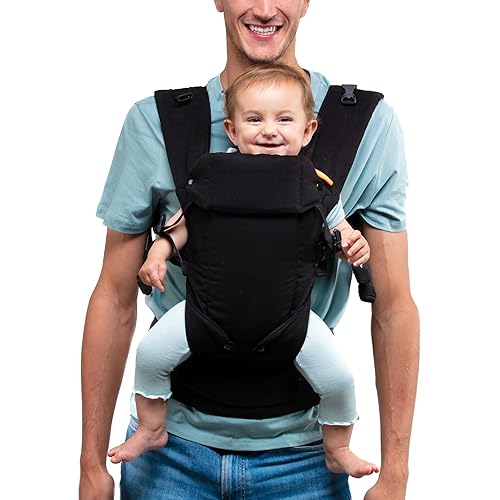
Comfort depends on load distribution. A good carrier moves the weight of your baby from your shoulders to your hips and lower back. Look for these features:
- Padded waist belt: Thicker padding over the hips helps with heavier babies.
- Wide, padded shoulder straps: Narrow straps concentrate pressure.
- Adjustable crossed straps: These help pull the baby close to your center of gravity.
- Breathable fabric: Mesh panels or lighter cotton blends help in warm weather.
Owners often report that Ergobaby carriers feel more supportive over several hours because of their structured waist belts and multi-point adjustments. Infantino carriers are often praised for being light and easy to pack, which is helpful for short outings or quick trips, though some parents find they feel less supportive for heavier toddlers over long walks. Consider how long you typically carry your baby in a single session.
Check Carry Positions and Safety Features
Safe babywearing follows the TICKS guideline: the baby should be Tight, In view at all times, Close enough to kiss, Keep chin off chest, and in a Supported back position. Any carrier you buy must let you achieve these, regardless of brand.
- Confirm the baby can sit in an upright, spread-squat position with knees above the bottom.
- Make sure the carrier fabric does not press the chin toward the chest.
- Check that the baby’s face stays visible and unobstructed.
- Test the buckles and seams before carrying your child.
Both brands publish safety instructions, and you should follow them exactly. Manufacturers specify the minimum and maximum weights for each model, and exceeding those limits can compromise fit and stability.
Consider Cleaning, Storage and Daily Practicality
A carrier you use every day should be easy to clean. Most fabric carriers are machine washable, but check the label for temperature limits and whether the buckles and inserts should be removed first. Ergobaby models with removable inserts and washable covers are common, while many Infantino models are also machine washable but may have fewer accessory options. Consider how often you will need to wash it during spit-up season.
Packability also matters if you travel. Lighter carriers fold smaller and can fit into a diaper bag without much effort.
Recommended gear
These items can help make either carrier more comfortable and secure.
- Infant insert for newborn support: A correctly sized insert helps keep a small baby’s head and spine supported. View on Amazon
- Carrier bib or drool pad: Protects the fabric from spit-up and saliva during feeding-age months. View on Amazon
- Carrier-specific storage bag: Keeps the carrier clean and protects straps from snagging. View on Amazon
Common Mistakes When Choosing Between These Carriers
- Buying by brand name alone: Torso length and waist size matter more than reputation.
- Ignoring the baby’s current weight: A carrier may be listed for newborns but feel poorly supported at higher weights.
- Skipping a fit test: Try the carrier with a weighted bag or your partner’s help before the first walk.
- Assuming all carry positions are available: Check each model’s listed positions, since not every version includes back carry or forward-facing.
- Overlooking the newborn setup: Newborns need specific support. For a closer look at setup considerations, see Ergo Baby Carrier 7 Week Old: Safe Setup, Fit and Positions Guide.
Tips for Making Your Decision
- List your top three uses: errands, long walks, travel or hands-free feeding time.
- Note your torso length and waist size before reading any spec sheet.
- Compare the weight and height limits side by side for your baby’s current size.
- Read the carry positions for each specific model, not just the brand overview.
- If possible, test the carrier at a store or with a friend’s loaner before committing.
If your baby seems unhappy in one carrier, the issue may be the fit or the position rather than the brand. Baby Doesn't Like Ergo Baby Carrier? 6 Best Alternatives Compared covers other options worth considering.
FAQ
Is an Ergobaby carrier better than an Infantino carrier?
Neither is better for every family. Ergobaby models often offer more adjustability and more carry positions, which suits many adults who wear their babies daily. Infantino models are typically lighter and simpler, which can be helpful for short trips or smaller frames.
Can I use an Infantino carrier from birth?
Some Infantino models support newborns, usually with an insert or infant setting. Check the manufacturer’s minimum weight and head-support instructions for the exact model before using it with a newborn.
Which carrier is easier to clean?
Both brands generally offer machine-washable fabric. Check each care label for temperature limits and whether inserts or buckles should be removed first. Models with removable covers are usually easier to maintain.
Do both carriers support back carry?
It depends on the model. Many Ergobaby carriers list back carry, while Infantino options vary. Confirm the carry positions in the product manual before buying.
How do I know if a carrier fits me?
Measure your torso length and waist and compare them to the manufacturer’s sizing guide. Try the carrier with a weight similar to your baby’s and check that the hip belt sits on your hip bones and the straps do not dig into your shoulders.
What is the safest carry position for a newborn?
A front-facing, upright position with the baby’s spine curved and knees higher than the bottom is generally recommended. Keep the face visible and the chin off the chest at all times, following the TICKS guidelines.
When should I talk to a professional about carrier use?
If your baby has a medical condition, hip or spine concerns, or breathing issues, consult your pediatrician or a certified babywearing educator before choosing a carrier or position.
Conclusion
Choosing between an ergo baby carrier and an Infantino carrier comes down to fit, age-appropriate support and how you plan to use the carrier. Measure your body, check your baby’s current weight and read the carry positions for each model. Once those details match your routine, the right choice usually becomes clear.
Related reading
- Tula Explore Baby Carrier vs Ergo 360: Which Fits Your Baby Better?
- Proper Baby Carrier Position vs Wrong Position: Which Should You Choose?
Ready to choose one?
About Graham Fisher
Graham Fisher is part of our editorial team and reviews and edits our baby gear guides, checking product details against manufacturer specifications and owner feedback.








Write Your Review
No reviews yet. Be the first to share your experience!