By Graham Fisher
Updated November 2026
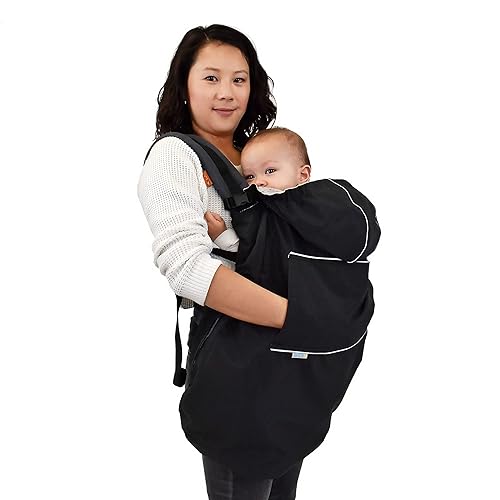
A rain poncho baby carrier is a waterproof cover that fits over both you and your child while you wear a soft-structured or framed carrier. This guide walks you through choosing the right poncho, fitting it over your carrier, and keeping your baby warm, dry, and breathing easily in rain, drizzle, or wind. By the end, you will know exactly what to check before you head out the door.
What a Rain Poncho Baby Carrier Does (and Doesn’t Do)
Most rain covers for carriers are sized to drape over the wearer’s torso and the baby’s head and body, leaving the carrier itself protected from moisture. The main purpose is to block rain and wind while keeping the baby’s face and body shielded. A poncho will not make you warmer on its own, and it will not replace proper layers underneath. Think of it as a shell layer that works best when the baby is already dressed for the temperature.
Shopping for one? See our guide: 6 Best Rain Covers for Baby Bjorn Carrier Compared (2026).
Many parents use the terms “rain poncho,” “rain cover,” and “carrier cover” interchangeably. Some are full ponchos with a hood and arm openings, while others are simpler sheets that tuck around the carrier. The right choice depends on how much coverage you need and how much you plan to move.
Step 1: Confirm Your Carrier Type and Size
Before buying or using a poncho, identify exactly what you are covering. Carrier type matters more than brand name because it determines where the poncho opening should sit and how much fabric will bunch up.
- Soft-structured carriers (buckle carriers with padded straps) usually sit close to the body, so a fitted poncho works well.
- Ring slings and wraps need a larger, more flexible cover because the fabric shifts as you move.
- Framed hiking carriers sit away from the body and need a cover with room above the pack.
Check the wearer’s torso length and the baby’s approximate weight and height. Most covers list a maximum child weight, often somewhere in the range of 20 to 45 pounds depending on the design. Stay under the stated limit and confirm that the poncho is compatible with your specific carrier model.
Step 2: Choose the Right Material and Features
Look for these features when comparing rain ponchos:
- Waterproof rating: Manufacturers often list a hydrostatic head rating in millimeters. Higher numbers mean better resistance to water pressure. A rating around 1,000 mm or higher is typical for rain-focused gear.
- Breathable fabric: Some ponchos use laminated fabrics that let vapor escape. Without breathability, both you and your baby can get clammy quickly.
- Clear or mesh viewing panel: A window lets you check on your baby without lifting the cover.
- Adjustable hem or drawstring: This keeps the cover snug at the baby’s feet and prevents wind from lifting the edges.
- Ventilation openings: Mesh vents near the top help airflow around the baby’s face.
- Stuff sack: A compact bag makes it easy to store the poncho in a diaper bag.
Step 3: Dress Your Baby for the Weather
A poncho blocks water, but it does not add insulation. Dress your baby in one more light layer than you would wear indoors, and add a hat that stays under the poncho hood. Avoid bulky snowsuits under a poncho, since they can compress the baby inside the carrier and make the fit unsafe.
Keep your baby’s face visible and unobstructed at all times. Breathable fabric and an open mesh panel help with airflow. Check that the baby’s chin is not pressed onto their chest, and that the fabric does not cover the nose or mouth.
Step 4: Put the Poncho On Correctly
Follow this order to avoid fumbling in the rain:
- Buckle the baby into the carrier first, using the same position you use on dry days.
- Check the baby’s position: seated high, spine curved naturally, knees at or above the seat.
- Drape the poncho over your head so the hood sits behind your shoulders.
- Pull the front down over the baby, keeping the viewing panel level with their face.
- Adjust the hem around the baby’s legs and cinch any drawstrings.
- Pull the sides snug so wind cannot push the fabric into the baby’s face.
Practice this at home before you need it. Doing it in a parking lot during a downpour is far harder than doing it in your living room.
Step 5: Check the Fit and Airflow Often
Once the poncho is on, do a quick check every 15 to 20 minutes. Look at your baby’s color, listen for normal breathing, and feel the back of their neck and chest to gauge temperature. Sweaty or cold skin means you should adjust layers or open a vent.
Also check that the poncho has not shifted to block your view of the baby or pressed the fabric against their face. A poncho that slides down over time is a common issue, especially with ring slings or wraps. Re-cinch the hem and reposition the front panel as needed.
Step 6: Plan for Wet Conditions and Storage
Before leaving home, pack a few essentials:
| Item | Why it matters |
|---|---|
| Spare dry layer for the baby | Damp clothes lose warmth quickly |
| Small towel | Wipes off rain from the carrier and the baby’s face |
| Zip-top bag | Keeps the wet poncho separate from dry items |
| Hat for baby | Prevents heat loss through the head |
| Stuff sack for poncho | Makes storage tidy and compact |
When you get home, hang the poncho to dry fully before folding it. Storing a damp cover leads to mildew and can weaken the waterproof coating over time.
Common Mistakes
- Covering the baby’s face: Always keep the airway clear. Use a mesh panel or pull the hood back.
- Overdressing under the poncho: Extra bulk can push the baby into an unsafe position.
- Buying a poncho that does not match the carrier: Loose covers on fitted carriers can flap, and tight covers on framed packs can restrict movement.
- Skipping the practice run: Learn the process at home so you are not struggling in heavy rain.
- Forgetting to check the baby: Rain covers reduce visibility. Check frequently.
- Folding a wet cover: Let it dry first to prevent mold and coating damage.
Tips for Better Results
- Choose a poncho in a bright color so you are easier to see on trails or busy streets.
- If you use a carrier on the front and back at different times, look for a cover that works with both positions.
- Test wind resistance by standing near a fan before a trip.
- Keep a small repair kit for seam tape or patches if your poncho is used often.
Recommended gear
These items pair well with a rain poncho for everyday wet-weather carrying.
- Clear rain cover for baby carriers: A clear window design lets you check your baby’s face without lifting the cover. View on Amazon
- Waterproof stuff sack: A compact bag keeps your wet poncho separate from dry items in the diaper bag. View on Amazon
- Quick-dry baby hat: A lightweight hat keeps heat in and fits easily under a poncho hood. View on Amazon
FAQ
Can I use a rain poncho with any baby carrier?
Most ponchos are designed for specific carrier types, such as soft-structured carriers or ring slings. Check the manufacturer’s compatibility list before buying, and avoid using a poncho with a carrier it was not designed for.
Is a rain poncho safe for newborns?
Newborns need extra attention to airflow and temperature. Make sure the poncho never covers the face and that the baby can breathe freely. Consult your pediatrician before using a carrier cover with a newborn, especially in cold or wet weather.
How do I keep my baby warm under a poncho?
Dress your baby in one light layer more than you would wear indoors, and add a hat. Check their chest and neck for warmth every 15 to 20 minutes. Avoid bulky outerwear that compresses the baby in the carrier.
Can I wear the poncho while walking or hiking?
Yes, but check the fit more often when you are moving. Fabric can shift, so re-cinch the hem and reposition the front panel regularly.
How do I clean a rain poncho?
Rinse off dirt with cool water and mild soap, then air dry completely. Avoid harsh detergents or high heat, which can damage the waterproof coating.
Do rain ponchos work in snow?
Many ponchos handle light snow, but wet snow can soak through fabric seams. Pair the poncho with insulated layers and check the manufacturer’s guidance on snow use.
How long does a rain poncho last?
Lifespan depends on how often you use it and how well you store it. Regular drying, careful folding, and gentle washing help the waterproof coating last longer.
When should I replace my rain poncho?
Replace it if the fabric tears, the seams separate, the zippers or drawstrings fail, or water begins soaking through during normal rain.
Conclusion
A rain poncho baby carrier setup works best when you match the cover to your carrier, dress your baby in the right layers, and check airflow regularly. Practice the fitting steps at home so you are ready when the weather turns. Consult a pediatrician or certified carrier specialist if you have questions about safe positioning for your baby’s age or size.
Related reading
- 7 Best Baby Backpack Carrier Rain Covers for Wet-Weather Hiking (2026)
- Woolworths Baby Carrier Price List: What Each Model Costs (2026)
- Which Tula Baby Carrier Is Best? 6 Top Picks Compared (2026)
Ready to choose one?
About Graham Fisher
Graham Fisher is part of our editorial team and reviews and edits our baby gear guides, checking product details against manufacturer specifications and owner feedback.