By Graham Fisher
Updated November 2026
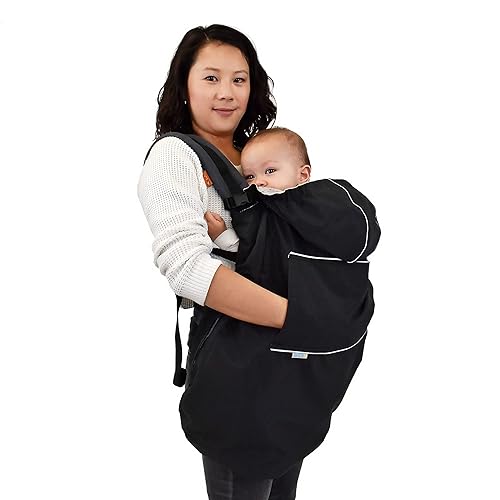
A kiddopotamus baby carrier cover shields your baby from sun, wind, light rain and cold air while you walk, shop or run errands. This guide explains how to confirm a cover fits your carrier, how to put it on without blocking your baby’s airflow, and how to use it safely in different weather. Plan on about ten minutes for your first fitting.
Confirm the Cover Matches Your Carrier
Covers are designed around specific carrier shapes, so compatibility matters more than brand name alone. Check the manufacturer’s listed carrier models and compare them with the label inside your carrier. If the label shows a different model number or size range, the cover may leave gaps at the shoulders or hip belt.
Shopping for one? See our guide: 6 Best Rain Covers for Baby Bjorn Carrier Compared (2026).
Look at the attachment points as well. Most covers use hook-and-loop strips, snaps or elastic loops that wrap around the carrier’s straps or the waist belt. Make sure the cover reaches the attachment points on your specific carrier without stretching, since stretched fabric tends to sag and let in wind.
Fit the Cover Before Your Baby Is Inside
Fitting the cover on an empty carrier saves you from fumbling with a fussy baby. Follow these steps:
- Put on the carrier with no baby inside and adjust the straps to your usual setting.
- Drape the cover over the front, leaving the top open so you can reach the head area once your baby is seated.
- Secure the attachment points on each shoulder strap, then the waist belt if the cover has one.
- Check that the hood or canopy sits above the top of the carrier and does not press on your baby’s face when they are seated.
- Test the zipper or closure to confirm you can open it with one hand.
Keep Airflow and Visibility Safe
Ventilation is the main safety concern with any carrier cover. Baby carrier guidance from pediatric groups stresses that a baby’s face should stay visible and unobstructed, and that the baby should never be covered in a way that restricts breathing. Keep the cover loose enough that air moves freely around your baby’s head and chest.
Check on your baby every few minutes, especially during the first few wears. Look for a clear view of the face, a chin that is not pressed toward the chest, and skin that feels warm but not sweaty. If you cannot see your baby’s face easily, open the cover or reposition it.
Consult your pediatrician before using a cover with a newborn, and ask about any health conditions that affect breathing or temperature control.
Adjust the Cover for Weather
A cover is most useful when it matches the conditions outside. In sun, a shade-style cover with a sun visor works well. In wind or light rain, a fully enclosed cover with a zipper keeps out drafts. In cold weather, layer a fleece or insulated cover over your baby’s clothing rather than relying on the cover alone, and check that your baby is not overheating when you move from outdoors into a warm building.
Warm-Weather Tips
Remove or unzip the cover when you are indoors or when temperatures rise. Trapped heat can make a baby overheat quickly, so keep the front panel open whenever you can.
Common Mistakes to Avoid
- Buying a cover without checking the carrier model against the manufacturer’s compatibility list.
- Fastening the cover before your baby is seated, which makes it hard to see their face.
- Letting fabric press against your baby’s nose or mouth when you bend forward.
- Forgetting to remove the cover when you move indoors, which can lead to overheating.
- Washing the cover with fabric softener or high heat, which can weaken water-resistant coatings.
Recommended Gear
- Kiddopotamus Baby Carrier Cover: Look for the brand’s own cover listed for your carrier model, since the attachment points are built to match. View on Amazon
- Kiddopotamus Baby Carrier Sun Shade: A shade-style option is useful for sunny days when you want airflow rather than full enclosure. View on Amazon
FAQ
Will a kiddopotamus baby carrier cover fit every carrier?
No. Covers are made for specific carrier shapes and attachment points, so check the manufacturer’s compatibility list against your carrier’s label before buying.
Can I use a carrier cover for a newborn?
Many parents do, but ask your pediatrician first and make sure your newborn’s face stays visible and their airflow is unrestricted at all times.
How do I wash the cover?
Follow the care label, usually a gentle cycle with mild detergent and air drying. Avoid fabric softener and high heat, which can reduce water resistance.
Conclusion
A well-fitted kiddopotamus baby carrier cover protects your baby from weather while keeping their face visible and their airflow clear. Confirm compatibility first, fit the cover before your baby is seated, and check on your baby often. For more fit and weather guidance, see Infantino Baby Carrier Winter Cover: How to Choose and Use One Safely (2026) and 7 Best Baby Carrier Shade Covers for Sun and Wind (2026).
Related reading
- UV Cover for Baby Carrier Review: Features and Performance
- Ergo Baby Carrier Guarantee: What It Covers and How to Use It
Ready to choose one?
About Graham Fisher
Graham Fisher is part of our editorial team and reviews and edits our baby gear guides, checking product details against manufacturer specifications and owner feedback.