By Graham Fisher
Updated November 2026
Finding a baby carrier petite mom can wear comfortably takes more than picking a popular name. Shorter torsos, narrower shoulders and smaller waists change where straps sit, how much the wearer’s back carries, and whether the seat stays high enough on the body. This guide compares four carriers from the Momcozy line and related designs, judged on adjustable sizing, back and lumbar support, seat width for smaller babies, and how easily the carrier can be put on alone. Each pick is described from its listing details and the features manufacturers and owners commonly point to, not from personal testing.
Our top picks at a glance
- 1
 TOP CHOICEBest overallMomcozy WeeSnug Newborn CarrierView on Amazon
- 2
 Best for easy solo dressingMomcozy Baby Wrap Carrier Easy-OnView on Amazon
- 3
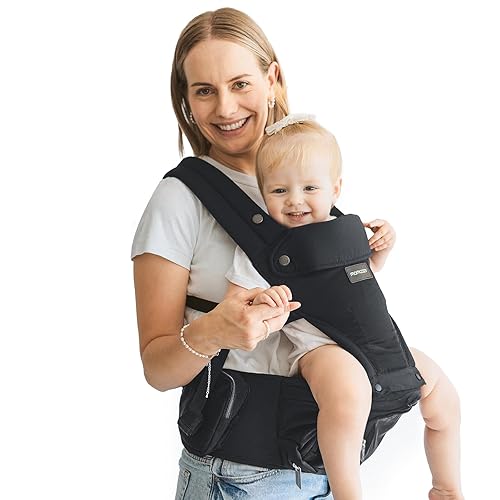 Best for a hip seat on longer walksMomcozy Baby Carrier with Hip SeatView on Amazon
- 4
 Best for lower-back supportMomcozy Sage Green Carrier with Lumbar SupportView on Amazon
Our Top Picks
| Product | Best for | Key feature |
|---|---|---|
| Momcozy WeeSnug newborn carrier | Newborns through early infancy, first-time petite wearers | Cross-back support and lumbar pad with a visual size scale |
| Momcozy Easy-On wrap carrier | Petite parents who dress without help | Two-piece easy-on design with adjustable XXS to XXL fit |
| Momcozy hip seat carrier | Longer walks and older babies | Detachable hip seat for forward-facing carry |
| Momcozy sage green carrier | Wearers who want lower-back relief | 3D EVA lumbar support with an X-shaped back design |
Momcozy WeeSnug Newborn Carrier
Ergonomic Cross-Back Support and Lumbar Pad, Effortless to Put On, 100% Soft Cotton, OEKO-TEX, Visual Size Scale, Khaki Momcozy Newborn Carrier WeeSnug- Lightweight and Cozy Comfort for 7-25 lbs
Best for: Newborn and early-infant wear for a petite wearer who wants lumbar cushioning and a clear fit guide.
This carrier suits smaller parents who are carrying a baby in the roughly 7 to 25 pound range and want a soft, close-fitting carry. The cross-back design and lumbar pad are meant to spread weight away from the lower back, which many shorter wearers find helpful when straps would otherwise ride too low or too high.
Key specs:
- Listed for babies from about 7 to 25 pounds
- Made from 100% soft cotton
- OEKO-TEX certified fabric, per the listing
- Visual size scale to help with adjustment
- Khaki colorway
Pros:
- Cross-back support helps distribute load
- Visual size scale makes fit easier to set
- Soft cotton is comfortable against skin
Cons:
- Weight range ends well before toddler size, so it is a short-term carrier
- Cotton can feel warmer than mesh in hot weather
Bottom line: A strong first choice for a petite parent carrying a newborn or small infant who wants lumbar comfort and a simple adjustment process.
Momcozy Baby Wrap Carrier Easy-On
Easy On Like a T-Shirt, XXS-XXL Adjustable Fit, IHDI Hip-Healthy, Lightweight Hands-Free Comfort Baby Sling Carrier, Black Momcozy Baby Wrap Carrier, Easy-On 2-Piece Design, Newborn to 33 lb
Best for: Petite parents who want to put the carrier on alone without tangled straps.
The two-piece, pull-over style is designed for hands-free dressing, which matters for shorter wearers who cannot easily reach behind to tighten a complicated buckle system. The adjustable XXS to XXL range is meant to cover a wide range of body sizes, so a petite wearer can dial in a snug fit.
Key specs:
- Listed for newborns up to about 33 pounds
- Adjustable size range from XXS to XXL
- Two-piece easy-on construction
- Lightweight hands-free design
- Black colorway
Pros:
- Easy to put on without help
- Wide adjustment range suits smaller frames
- Covers a long span from newborn to heavier infant
Cons:
- Wrap-style carriers take a few practice attempts to adjust the seat height
- Fabric carriers generally need more care to keep the seat snug as baby grows
Bottom line: Best for a petite parent who prioritizes quick solo dressing and wants one carrier that covers a long infant range.
Momcozy Baby Carrier with Hip Seat
Momcozy Baby Carrier with Hip Seat, 2-in-1 Forward-Facing Carry for Long Walks, Detachable Hands-Free Infant Carrier 7-44lbs, All Seasons Toddler Carrier Fits Waist Sizes up to 45 Inches, Black
Best for: Longer walks and an older baby who wants to face outward.
This carrier pairs a forward-facing carry with a detachable hip seat, a design that many parents of older babies prefer for supporting a heavier child’s weight on the hips. For a petite wearer, the waist-size range matters most, so check the fit against your own measurements before buying.
Key specs:
- Listed for babies from 7 to 44 pounds
- Fits waist sizes up to 45 inches, per the listing
- Detachable hands-free hip seat
- Forward-facing and hip carry options
- Black colorway
Pros:
- Hip seat shifts weight away from the shoulders
- Covers a broad weight range as baby grows
- Detachable seat adds versatility
Cons:
- A large weight range means more bulk than a newborn-only carrier
- Petite wearers may need to tighten the waist belt fully to avoid sliding
Bottom line: A good pick for a petite parent carrying an older, heavier baby on longer outings, provided the waist range fits.
Momcozy Sage Green Carrier with Lumbar Support
3D EVA Lumbar Support, Ergonomic X-Shaped Back Design, M-Position Hip Health, Hands-Free for Moms & Dads, Sage Green Momcozy Baby Carrier with Natural Cotton Linen, Soft & Cozy, Built to Last
Best for: Petite wearers who want extra lower-back relief and a breathable natural fabric.
The 3D EVA lumbar support and X-shaped back are meant to hold the carrier steady and reduce pressure on the lower back. Many shorter wearers find that load concentrates in the lumbar area, so a supported back panel can make a noticeable difference over a longer carry.
Key specs:
- 3D EVA lumbar support panel
- X-shaped ergonomic back design
- Natural cotton linen blend, per the listing
- M-position hip-healthy seat design
- Sage green colorway
Pros:
- Lumbar support targets the lower back
- Natural fabric feels soft and breathable
- Hip-healthy M-position supports the baby’s legs
Cons:
- Structured lumbar panels add some stiffness compared with a simple wrap
- Linen-blend fabric may show wear sooner than synthetic blends
Bottom line: Ideal for a petite parent who has lower-back concerns and wants a structured, supportive carrier for everyday use.
Buying Guide
Sizing and Fit for a Petite Frame
Measure your torso length from the base of your neck to your waist, and your waist circumference at the narrowest point. Many carriers list a waist range; a petite wearer may need the lower end of the range, and some models run large at the shoulders. Check whether the shoulder straps can be shortened enough to keep the baby’s weight close and centered.
Good picks for this: Momcozy WeeSnug newborn carrier, Momcozy Easy-On wrap carrier
Lumbar and Back Support
Lower-back support matters more as a baby gets heavier. Look for a padded or structured lumbar panel, a wide back panel, and straps that move weight to the hips rather than the shoulders. A carrier that feels fine for twenty minutes may cause fatigue after an hour if the support is weak.
Good picks for this: Momcozy sage green carrier, Momcozy WeeSnug newborn carrier
Weight and Age Range
Manufacturers list weight limits for each carrier, and these are an important safety guide. Newborn-focused models usually end around 20 to 25 pounds, while wider-range carriers can reach 33 to 44 pounds. Choose a carrier whose range matches how long you expect to use it.
Good picks for this: Momcozy hip seat carrier, Momcozy Easy-On wrap carrier
Ease of Putting It On Alone
If you carry on your own, a carrier that can be put on and taken off without help saves time and reduces the chance of an unsafe, loose fit. Two-piece and pull-over designs are often easier for shorter wearers who cannot reach the back buckles comfortably.
Good picks for this: Momcozy Easy-On wrap carrier, Momcozy WeeSnug newborn carrier
Seat Position and Hip Health
Babies should sit with knees higher than their bottom and legs spread into a natural M shape. Look for a carrier that supports the thighs and does not force the legs straight down. The hip seat option is useful when an older baby needs more support.
Good picks for this: Momcozy sage green carrier, Momcozy hip seat carrier
Fabric, Breathability and Season
Cotton and linen blends feel soft and tend to be comfortable in mild weather, while heavier fabrics can feel warm in summer. Consider how often you will wear the carrier outside and whether you need a fabric that is easy to wash.
Good picks for this: Momcozy WeeSnug newborn carrier, Momcozy sage green carrier
Care and Durability
Follow the manufacturer’s washing instructions, which often recommend machine washing on a gentle cycle and air drying. Check seams and buckles regularly, and replace any carrier with fraying straps or worn fasteners. Sun and repeated washing can weaken fabric over time.
Good picks for this: Momcozy Easy-On wrap carrier, Momcozy hip seat carrier
FAQ
What is the best baby carrier for a petite mom?
There is no single answer for every petite parent, but carriers with a wide adjustment range, lumbar support and an easy solo fit tend to work well for smaller frames. The Momcozy WeeSnug and Easy-On models are good starting points for newborn and infant use.
How do I know if a baby carrier fits a petite frame?
Check the listed waist range and torso guidance, then test the fit with the baby at the lowest weight you will carry. The baby should sit high enough that you can kiss the top of their head without leaning, and the straps should not gap at the shoulders.
Can a petite mom use a carrier with a hip seat?
Yes, if your waist falls within the carrier’s listed range and the belt can be tightened fully. Hip seats are often used for older babies, and a waist belt that slides or sits too high can make carrying less comfortable.
When should a newborn be carried in a front carrier?
Newborns need close, supported positioning with the head and neck protected. Follow the manufacturer’s newborn instructions and the general guidance from safety organizations, and check the baby’s airway and chin position often.
How often should I check the carrier for wear?
Check straps, buckles and stitching before each use, and inspect the carrier more thoroughly after washing. Replace any carrier that shows fraying, loose seams or weakened fasteners.
Should I consult a professional about carrier use?
If you have back or hip conditions, a recent injury, or concerns about your baby’s hip development or breathing, speak with a physical therapist, pediatrician or certified carrier consultant before choosing a carrier.
Conclusion
For a baby carrier petite mom can wear comfortably, start with the fit. The Momcozy WeeSnug suits newborn and early-infant carrying with lumbar support, the Easy-On wrap carrier suits solo dressing and a wide size range, the hip seat carrier suits longer walks with an older baby, and the sage green lumbar-support carrier suits wearers who need extra back relief. Match the weight range, seat position and fit to your own measurements and your baby’s age before you buy.
Sources
- Consumer product safety guidance on infant carriers and recalls (cpsc.gov)
- Pediatric guidance on safe infant positioning and carrier use (aap.org)
- Infant safety and breathing guidance for caregivers (cdc.gov)
Related reading
- Tula Baby Carrier Plus Size Mom: 3 Best Picks for Comfort (2026)
- Connecta Baby Carrier Petite: Fit, Sizing and Safe Use Guide (2026)
- Baby Carrier Too Big? 7 Best Carriers for Petite Parents and Small Babies
- 7 Best Baby Carriers for Short Torso Moms and Dads (2026)
- 7 Best Baby Carriers for Overweight Mom: Picks for Comfort and Fit (2026)
- 6 Best Baby Carrier Narrow Seat Options for Petite Frames (2026)
About Graham Fisher
Graham Fisher is part of our editorial team and reviews and edits our baby gear guides, checking product details against manufacturer specifications and owner feedback.