By Graham Fisher
Updated November 2026
A big and tall baby carrier is built for parents who find standard carriers short in the torso, tight across the shoulders or uncomfortable at the hips. This review looks at a military-style front carrier with lumbar support, marketed to larger dads and taller parents for infants through toddlers. It suits taller or broad-shouldered caregivers who want a structured, padded carrier with a wide weight range and a lumbar belt. It is less suited to parents who need a soft-structured wrap, a babywearing option for newborns from day one, or a carrier they can fold very small for travel. The sections below cover the listing details, a spec table, pros and cons, performance based on owner feedback patterns, and buying tips.
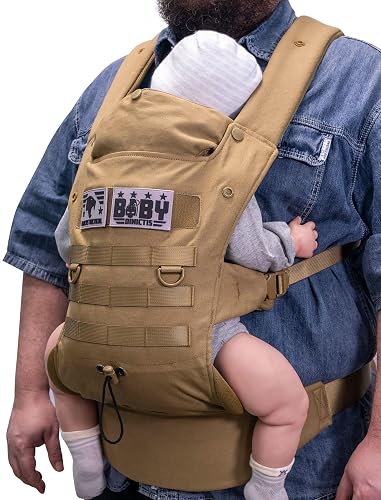
Infants to Toddlers (8-33 lbs), Cozy and Lightweight, Military Style, Big and Tall Parents Ergonomic Lumbar Support Baby Carrier for Dad – Coyote Brown
Product Overview
This carrier is sold on Amazon US as a “Cozy and Lightweight, Military Style” design aimed at dads and taller parents. The listing describes it as an ergonomic carrier with lumbar support, supporting children from infant size through toddler size, with a stated range of 8 to 33 pounds. The color listed is Coyote Brown. Because the design is marketed toward big and tall users, the emphasis is on torso length, shoulder width and a waist area that accommodates a larger frame, rather than on the newborn-focused fit that many standard carriers prioritize.
The product category is a soft, structured front-and-back carrier with padded straps and a lumbar support panel. Carriers in this style typically rely on a waist belt to move load from the shoulders to the hips, which is the main reason they appeal to parents who experience back strain from carrying a child on the shoulders alone. Owners of similar military-style carriers often mention that the padded belt and structured back panel make a noticeable difference on longer walks, though results vary with the wearer’s build and the child’s weight.
Because the listing is the main source of specifications, some details such as exact strap lengths, fabric composition and buckle type should be checked on the product page before purchase. Treat the descriptions in this review as a summary of what the listing emphasizes, not as a substitute for the manufacturer’s full instructions.
Key Features & Specifications
The table below lists the specifications stated in the product name and the category features the listing emphasizes. Items not confirmed by the title have been left out.
| Feature | Details |
|---|---|
| Target child size | Infants to toddlers |
| Stated child weight range | 8 to 33 lbs |
| Intended wearer | Big and tall parents, dads |
| Design style | Military style, structured |
| Back support | Ergonomic lumbar support |
| Weight description | Listed as cozy and lightweight |
| Color | Coyote Brown |
| Carry positions | Front and back carry (typical for this category; confirm on the listing) |
Manufacturers of carriers in this class usually specify the maximum wearer size, strap adjustment range and hip-seat dimensions. Check those values directly on the listing, since they determine whether the carrier fits a 6-foot-plus frame or a broad chest comfortably.
Pros & Cons
Pros
- Marketed specifically for big and tall parents, which can mean longer torso and shoulder dimensions than standard carriers.
- Lumbar support is stated in the product name, which helps shift weight to the hips on longer carries.
- Covers a wide range from infant to toddler, so one carrier can serve several stages.
- Military-style construction is often described by owners as sturdy and suited to outdoor use.
- The listing describes the carrier as lightweight and cozy, which matters for all-day wear.
Cons
- The stated 8-pound minimum means it is not a newborn carrier; very young infants need a different design.
- Structured carriers are bulkier to pack than soft wraps or slim mesh carriers.
- Owners of structured carriers sometimes report a learning curve when adjusting straps and the waist belt for a secure fit.
- Olive and brown military colors may not suit every preference, and fabric care should be checked before buying.
Performance Analysis
Performance in a carrier like this depends on three factors: how well the torso and shoulder straps fit the wearer, how effectively the lumbar belt transfers weight to the hips, and how the child’s weight distributes across the front or back. The stated range of 8 to 33 pounds covers a wide developmental span, but comfort at the upper end of that range depends heavily on correct adjustment. Owners of structured carriers in general often note that loads feel noticeably lighter once the waist belt is snug and the shoulder straps are not doing most of the work.
Based on common owner feedback patterns for big and tall carriers, the most frequent positive comments concern the extra strap length and the wider seat area, which reduce the strain of a child pressing into the wearer’s chest or hips. The most frequent limitations involve the amount of adjustment needed to get a secure seat, and the fact that a carrier designed for toddlers can feel bulky when the child is much smaller. Parents should expect a few practice sessions with an empty carrier or a light doll before using it with a child.
Safety is a central concern for any carrier. Keep the baby’s face visible and chin off the chest, check that the fabric and buckles are secure before each walk, and follow the manufacturer’s weight and age limits. For questions about your child’s specific development, speak with a pediatrician or a certified babywearing educator.
Who Should Buy This Product?
This carrier fits best for taller or broad-shouldered parents, particularly dads, who have found standard carriers too short or too narrow. It also suits caregivers who expect to carry a toddler regularly on hikes, errands or travel and want lumbar support for longer periods. If your child will be older than infancy when you start carrying, and you value a structured back and waist belt, this design is a reasonable match.
Skip this carrier if you need to use one from birth, if you want a soft wrap for very small babies, or if packability and a low-profile look are your top priorities. Parents of a newborn should look at carriers rated for smaller infants, and those who want a minimal, compressible option may prefer a lighter mesh or soft-structured model.
Buying Guide
Before buying any big and tall baby carrier, measure your torso length from the base of your neck to your waist, and measure your shoulder width. Compare those numbers with the manufacturer’s listed dimensions, since many carriers state a maximum wearer size rather than a full fit chart. Also confirm the child weight range, because a carrier rated from 8 to 33 pounds will not fit a newborn and may become uncomfortable for a child approaching its upper limit.
Look for these features when comparing options:
- Lumbar or waist belt padding wide enough to sit on the hips rather than the waist.
- Adjustable shoulder straps with enough length to fit a larger frame.
- Front and back carry options, so the carrier can grow with your child.
- Machine-washable fabric and easy-release buckles for cleaning and daily use.
- Clear, printed instructions with a weight and age chart.
Two well-known alternatives are worth comparing if you want a different fit or feature balance:
A military MOLLE-style infant and toddler carrier with a lumbar support waist belt and an M-position hip-healthy carry is a close match in concept. It is marketed for men and dads with a similar 8 to 33 pound range, which makes it a direct comparison point for structure and belt design.

Baby Carrier for Men & Dads, Military MOLLE Infant Toddler Carrier with Lumbar Support Waist Belt, Ergonomic M-Position Hip-Healthy Front Carry 8-33 lbs, Black
A lumbar support infant carrier from the 0 to 36 month range, with a foldable headrest and carabiners and marketed for big and tall parents, offers a different approach. Its wider age span and headrest make it useful if you expect to carry a child who needs head support for longer.
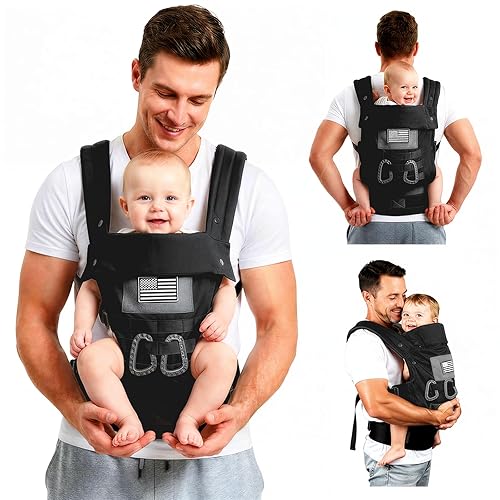
Baby Carrier, Lumbar Support Infant Carrier (0-36M, 8-33 lbs) with Foldable Headrest Carabiners for Big and Tall Parents, Men, Women (Black)
For more background on fit across sizes, see 5 Best Man Sized Baby Carriers for Tall and Broad-Shouldered Dads (2026) and Baby Carrier Too Big? 7 Best Carriers for Petite Parents and Small Babies. If you are deciding when to start carrying, When to Buy a Baby Carrier: 5 Best Picks for Every Need (2026) covers timing. For walking and comfort tips, read Walking with Baby Carrier: A Step-by-Step Guide for Comfort and Safety, and for outdoor use see Used Hiking Baby Carrier Picks: 6 Best Options for Trail Days (2026).
FAQ
Is this a big and tall baby carrier suitable for newborns?
No. The listing states an 8-pound minimum and describes the carrier for infants through toddlers. Newborns need a carrier designed for their size and head support, so look for a model rated from birth.
How do I know if the carrier fits my body size?
Measure your torso length and shoulder width, then compare those numbers with the dimensions in the manufacturer’s listing. If the listing does not give a fit chart, contact the seller or check the product page for sizing details before buying.
Does lumbar support actually reduce back strain?
A padded waist belt that sits on the hips can move some of the child’s weight away from the shoulders. Owners of structured carriers often report less shoulder fatigue, though results depend on fit and carrying time. Consult a physical therapist or doctor if you have a back condition.
Can I use this carrier for both front and back carry?
Many carriers in this category support both positions. Confirm the carry options on the product listing, and follow the manufacturer’s instructions for back carry, which usually requires a second person or a specific technique.
How much weight can a toddler be before the carrier is no longer comfortable?
The stated upper limit is 33 pounds. As a child nears that weight, straps and the waist belt need to be snug and correctly positioned. Parents often find comfort declines on long walks as the child gets heavier, so plan breaks.
Is the carrier easy to clean?
Check the care label on the listing. Many structured carriers can be spot cleaned or machine washed on a gentle cycle, but drying and buckle handling vary, so follow the manufacturer’s directions.
Should I compare this with a different carrier before deciding?
Yes. Compare lumbar design, weight range, age span and packability. The alternatives in the Buying Guide offer different balances of structure and features, so reviewing all three against your needs is a sound approach. Always verify current specifications on each product page.
Final Verdict
This big and tall baby carrier is a reasonable choice for taller parents who need a structured, lumbar-supported carrier for infants and toddlers in the 8 to 33 pound range. It is best suited to dads and broad-shouldered caregivers who will carry a child beyond the newborn stage and value a waist belt for comfort. It is a poor fit for newborns, for parents who need a very compact carrier, or for anyone who wants a soft wrap. Check the full specifications on the listing, confirm the fit against your own measurements, and practice adjusting the straps before using it with your child. View on Amazon
About Graham Fisher
Graham Fisher is part of our editorial team and reviews and edits our baby gear guides, checking product details against manufacturer specifications and owner feedback.