By Graham Fisher
Safety note: this guide is general information to help you understand car seat types. Always follow your car seat’s manual and your vehicle owner’s manual, the guidance of the National Highway Traffic Safety Administration (NHTSA) and the American Academy of Pediatrics (AAP), and have your installation checked by a certified Child Passenger Safety Technician when possible. We do not provide installation instructions.
Choosing a car seat starts with your child’s current age, weight and height, then your vehicle and how you travel. The three main seat types for babies and young children differ in which directions they face, how long they last and how portable they are.
What NHTSA and the AAP recommend
NHTSA recommends that children ride rear-facing as long as possible, until they reach the top height or weight limit allowed by their car seat’s manufacturer. They then move to a forward-facing seat with a harness and tether, then to a booster seat, and finally to the vehicle seat belt when it fits properly. NHTSA’s Car Seats and Booster Seats page includes a car seat finder by age and size. The AAP’s Car Safety Seats: Information for Families gives the same core advice: keep children rear-facing as long as possible, to the highest weight or height the seat allows.
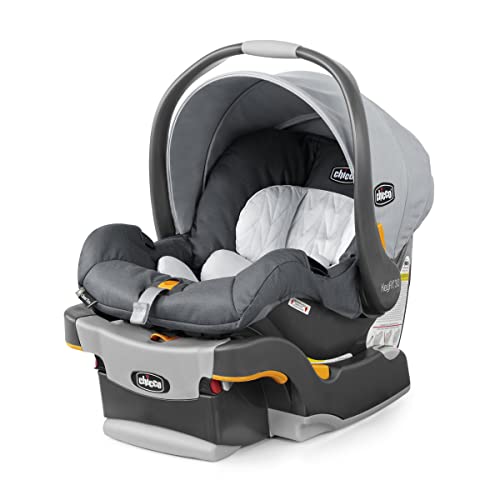
Infant car seats
Rear-facing only seats designed for newborns and infants. Most have a carry handle and a base that stays installed in the car.
- Pros: portable; click in and out of the base; often compatible with strollers as part of a travel system; designed to fit small newborns.
- Cons: outgrown sooner, when the child reaches the seat’s height or weight limit; you will then need a convertible or all-in-one seat. The carrier becomes heavy to carry as the baby grows.
- Who it suits: families who move the baby in and out of the car often, or who want stroller compatibility.
Convertible car seats
Seats that can be used rear-facing and later forward-facing with a harness. They stay installed in the car.
- Pros: longer use; many have higher rear-facing limits than infant seats, which helps children stay rear-facing longer.
- Cons: not portable; larger and heavier; some take up significant front-to-back space when rear-facing. Not all fit small newborns well; check the seat’s minimum weight and fit guidance.
- Who it suits: families who want one seat for several years, starting from birth if the seat’s limits and fit allow, or after the infant seat.
All-in-one car seats
Seats designed to be used rear-facing, forward-facing with a harness and later as a booster.
- Pros: potentially the longest use from a single purchase.
- Cons: large and heavy; may not fit every vehicle or every child well in every mode; check the seat’s expiration date, which may arrive before your child finishes the booster stage.
- Who it suits: families who want to minimize purchases and have space in their vehicle.
Comparison table
| Type | Directions | Portable | Typical lifespan of use | Main trade-off |
|---|---|---|---|---|
| Infant | Rear-facing only | Yes | Shortest | Outgrown sooner |
| Convertible | Rear and forward (harness) | No | Longer | Bulkier, stays in car |
| All-in-one | Rear, forward (harness), booster | No | Longest potential | Largest; fit varies by mode |
Checks before you buy
- Your child’s size: compare your child’s weight and height with the seat’s limits for each mode.
- Your vehicle: check how the seat installs (lower anchors or seat belt) and whether it fits the seating positions you plan to use. Some retailers and manufacturers publish vehicle fit information.
- Your routine: if you move the seat between vehicles often, a lighter seat or an infant seat with extra bases may help.
- Expiration date and labels: every seat has a manufacture date and a useful life set by the manufacturer. See Car Seat Expiration and Recalls.
- Registration: register the seat with the manufacturer to receive recall notices.
Common misunderstandings
- “My child’s legs touch the seat back, so it’s time to turn forward.” NHTSA and the AAP base the move on the seat’s height and weight limits, not leg position.
- “A more expensive seat is safer.” All car seats sold in the U.S. must meet the same federal safety standard. The best seat is one that fits your child and vehicle and that you can install and use correctly every time.
- “Any used seat is fine.” Avoid seats with unknown history, a past crash outside NHTSA’s minor-crash criteria and the manufacturer’s guidance, missing labels or an expired date.
Get your installation checked
NHTSA’s site includes a locator for car seat inspection stations and certified Child Passenger Safety Technicians, who can show you how to install and use your seat. Find it on NHTSA’s car seat page.
Frequently asked questions
Can I use a convertible car seat from birth?
Many convertible seats are rated from a low minimum weight. Check the seat’s limits and fit guidance for newborns, and confirm that it fits your baby properly.
When should my child turn forward-facing?
NHTSA and the AAP recommend staying rear-facing as long as possible, until your child reaches the rear-facing height or weight limit of their seat.
Related guides
- Car Seat Expiration and Recalls: Where to Check
- Travel System vs Separate Stroller and Infant Seat
- All car seat guides
About Graham Fisher
Graham Fisher is part of our editorial team and reviews and edits our baby gear guides, checking product details against manufacturer specifications and owner feedback.