By Graham Fisher
Updated November 2026
A Fisher Price plug in baby swing runs on household power rather than batteries, which means steadier motion and fewer trips to the store for replacements. In this guide, you will learn how to judge whether a plug-in model fits your home, how to set it up and use it safely, and which mistakes to avoid. The advice applies to most plug-in infant swings, so you can use it whether you are shopping or already own one.
What a Plug-In Baby Swing Does Differently
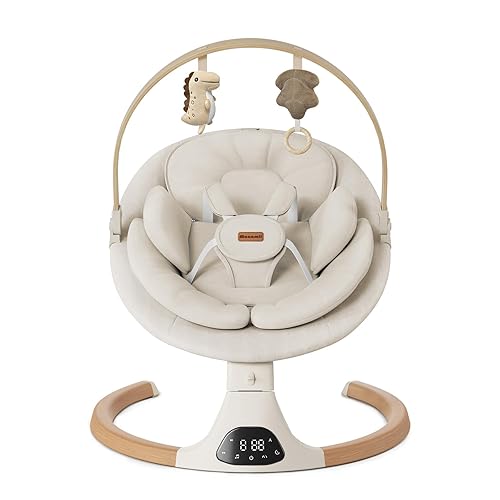
Plug-in swings use an AC adapter to power the motor that drives the seat’s back-and-forth or side-to-side motion. Many owners find that the motion stays consistent over a long session, while battery models can slow as cells drain. Plug-in models also tend to be heavier and less portable, since they need a nearby outlet. If you plan to move the swing between rooms often, check whether the cord length suits your layout before you commit.
Most Fisher-Price swings with a plug-in option offer a combination of power modes, so you can run them from an outlet and, in some models, add batteries as a backup. Manufacturers typically specify the adapter type, voltage and maximum weight on the product label and manual. Read these details before you buy, because a mismatched adapter can damage the motor.
Check the Fit and Placement First
Before you unpack anything, measure the floor space you have. Swings usually need a footprint of roughly two feet by two feet, plus clearance for the seat to move freely. Keep the swing away from walls, furniture, curtains and cords so the seat has room to travel without bumping anything. A location near an outlet, but not directly behind the swing, lets the cord run without tension.
Think about sightlines too. Many caregivers place the swing where they can see the baby from the kitchen or while folding laundry. Placing it near a window can help with daylight, but keep the cord and any blind cords well out of baby’s reach.
Measurements to Note Before Buying
| Factor | What to Check | Why It Matters |
|---|---|---|
| Floor footprint | Length and width when fully open | Confirms the swing fits your room |
| Cord length | Distance from the adapter to the base | Determines where you can place the outlet |
| Weight limit | Maximum baby weight in the manual | Stopping use at the limit is a safety requirement |
| Power source | Adapter type and whether batteries are a backup | Affects portability during power outages |
| Seat recline | Number of positions | Matters for newborns who need a more reclined seat |
Step-by-Step Setup
- Unbox the swing and lay out every part. Compare the parts against the parts list in the manual.
- Assemble the base and frame according to the diagram. Tighten all fasteners fully, then check that the frame does not wobble.
- Attach the seat or cradle insert, confirming that it clicks or locks into place.
- Connect the AC adapter to the swing’s power jack first, then plug the adapter into a wall outlet. Use only the adapter supplied or specified by the manufacturer.
- Route the cord away from the seat, under the base where possible, and along a wall or behind furniture so it is not within baby’s reach.
- Test each speed and motion setting with the seat empty. Listen for grinding or rattling, and confirm the motion stays smooth.
- Use the included straps every time, buckling them snugly across the baby’s lap and crotch.
Tools and Supplies Checklist
- The Allen wrench or screwdriver included with the swing
- A surge-protected power strip, if you use one (plug the adapter directly into the wall when possible)
- Cord clips or cable covers to keep the wire tidy
- The owner’s manual, kept with the swing for future reference
- A fresh set of batteries, if your model accepts them as a backup
Safe Use Guidelines
Follow the age, weight and developmental guidance in the manual. Most manufacturers say to stop using an infant swing once a baby can sit up unassisted or reaches the listed weight limit, and to avoid using a swing for sleep. Safe sleep guidance from pediatric organizations recommends a firm, flat sleep surface, so baby should be moved to a crib or bassinet once drowsy or asleep.
Keep the swing on a flat, level floor. Never place it on a raised surface such as a table or countertop. Do not hang toys or cords from the frame in a way that could wrap around a neck. Unplug the adapter when the swing is not in use and when you clean it. Ask your pediatrician if you have questions about developmental readiness or whether your baby’s health needs affect how long they should use a swing.
Common Mistakes to Avoid
- Using the swing for sleep. Babies can slump forward in a swing, which raises breathing risks. Move baby to a flat sleep surface once drowsy.
- Running the cord under the seat. Pinch points and tangled wire can cause problems, so route the cord along the base and wall.
- Using an incompatible adapter. A replacement adapter with the wrong voltage or polarity can damage the motor. Use only the specified adapter.
- Skipping the straps. Even a calm baby can shift, so buckle every time.
- Placing the swing near a window with blind cords. Cords can become a strangulation hazard, so keep them out of reach.
- Ignoring wobble. If the frame rocks or the motion sounds rough, stop and recheck the assembly.
Recommended gear
A basic cord management kit helps keep the adapter wire out of reach and away from foot traffic. Look for adhesive cord clips and a cable sleeve sized for a thin adapter line.
A small surge-protected power strip with a child-resistant design can protect the swing’s electronics from voltage spikes. Make sure it is rated for the swing’s power draw.
A pair of replacement AA batteries gives you backup power during an outage, which keeps the swing running if your model supports battery use.
Related Reading
If you are still comparing options, read Swing or Rocker for Baby (2026): Which Should You Choose? to understand how motion styles differ. For a broader look at what to buy, see Best 6 Baby Swings for Infants: Features and Limits Compared and Baby Swing or Bouncer Better? Which Should You Choose? (2026). Parents who want a portable alternative can review 5 Best Baby Swings for Infants of 2026: Compared to see how plug-in and battery models stack up.
FAQ
Can I use a Fisher Price plug in baby swing without batteries?
Yes, if the model is designed to run on its AC adapter. Check the manual to confirm whether batteries are optional, required or unsupported for your specific swing.
Is it safe to leave a plug-in swing plugged in all the time?
Most owners unplug the adapter when the swing is not in use, which reduces wear on the adapter and cord and lowers the chance of a cord hazard. Follow the manufacturer’s guidance and inspect the cord regularly for damage.
How do I know when to stop using the swing?
Stop when your baby reaches the maximum weight listed in the manual or begins trying to sit up unassisted. Many pediatric sources also advise limiting total swing time each day, so check with your pediatrician about what is appropriate.
Can I replace a lost or damaged adapter with any adapter?
No. Use only the adapter specified by the manufacturer, matching voltage, current and polarity. Contact the manufacturer’s customer service for a replacement if you cannot find the original.
Why does my swing make a humming or clicking noise?
Some motor noise is normal, but grinding, rattling or loud clicking can signal a loose part or a worn gear. Unplug the swing, tighten all fasteners and inspect the motion. If the noise continues, stop using the swing and contact the manufacturer.
Where can I find the exact dimensions and weight limit for my model?
The owner’s manual and the product page list the footprint, cord length and weight limit. Check the official manufacturer site for current specifications, since details can change between versions.
Should I consult a professional about using a swing for my baby?
Yes, especially if your baby was born early, has reflux, breathing concerns or other health needs. A pediatrician or pediatric physical therapist can advise whether a swing is appropriate and for how long.
Conclusion
A Fisher Price plug in baby swing offers steady, outlet-powered motion when it is placed, assembled and used correctly. Measure your floor space, route the cord safely, and use only the specified adapter. Always move your baby to a flat sleep surface once drowsy, and follow the weight and age limits in the manual.
Related reading
- Vaude Swing Baby Carrier Review: Fit, Features and Safe Use
- Swing or Rocker for Baby (2026): Which Should You Choose?
- Lascal Baby Carrier Price: What You'll Pay and How to Choose (2026)
Ready to choose one?
About Graham Fisher
Graham Fisher is part of our editorial team and reviews and edits our baby gear guides, checking product details against manufacturer specifications and owner feedback.