By Graham Fisher
Updated November 2026
Crib size quilt dimensions are usually built around a standard crib mattress, which measures about 28 by 52 inches. This guide shows you how to measure your own crib, choose a quilt that fits without overhanging the sides, and decide whether a quilt belongs in the crib at all. Most pediatric guidance recommends keeping loose bedding out of the sleep space until your child is older, so the sizing advice here also covers when a quilt is appropriate.
Know the Standard Crib Mattress Dimensions
Most full-size cribs sold in the United States accept a mattress of roughly 28 inches wide by 52 inches long, and the thickness is typically around 5 to 6 inches. Manufacturers specify the exact mattress size in each crib’s manual, and that number is the one that matters. A quilt sized for a twin bed will almost always be too large for a crib and can create a bunching or entanglement risk.
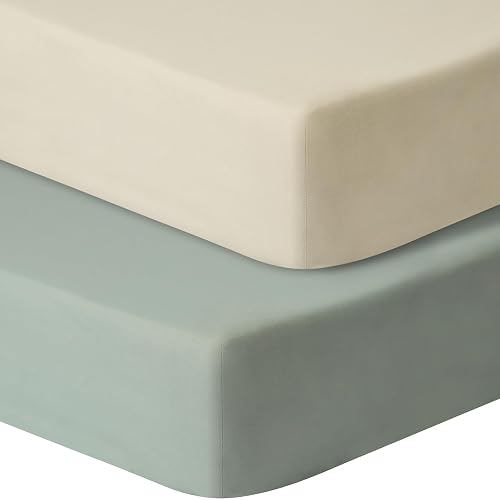
Shopping for one? See our guide: 3 Best Crib Sheets Cotton Organics for Sensitive Skin (2026).
Choose Quilt Dimensions That Match Your Crib or Toddler Bed
If you do decide to use a quilt, plan around the mattress footprint rather than a generic bed size. Keep the quilt well under the mattress edges so it cannot drape over the rails or fall into the gaps between the mattress and the frame. Toddler beds are a different case: many are sized between a crib and a twin, so check the bed’s listed dimensions before ordering.
- Measure the inside length and width of the crib frame, not just the mattress.
- Subtract any mattress thickness that sits above the rails when you lower the mattress to its lowest setting.
- Compare your numbers with the manufacturer’s listed mattress dimensions.
- Choose a quilt that is noticeably smaller than the mattress so it stays tucked and flat.
Check Your Crib Quilt Against Safety Guidance
Sizing is only one part of the picture. Loose blankets, pillows, and quilts raise suffocation and entrapment concerns for infants, and the Consumer Product Safety Commission and the American Academy of Pediatrics both advise against placing them in the crib. If your child is older and can climb out, a lightweight quilt may be used according to the manufacturer’s rules, but keep it away from the sleeping area until that stage. For questions specific to your child, consult your pediatrician.
Signs a Quilt Is the Wrong Size
A quilt that is too big will hang over the sides, slide toward the baby, or catch on the rails. A quilt that is too small will leave gaps that can trap a limb. Either problem is a reason to switch to a better-fitting option or remove the quilt altogether.
Common Mistakes
- Buying a quilt by bed size instead of crib mattress size.
- Assuming a quilt that fits a toddler bed also fits a crib.
- Forgetting to account for mattress thickness when measuring the frame.
- Using a quilt in the crib before your child is old enough and safe to use one.
- Tucking excess fabric under the mattress, where it can work loose.
Recommended gear
A soft cloth measuring tape makes it easy to check mattress and frame dimensions accurately. Keep a crib-fitted mattress pad in place so the surface stays firm and flat, since a sagging or uneven mattress changes how any bedding fits. For a more complete look at protective layers, see Waterproof Crib Mattress Pads: How to Choose and Use One Safely (2026) and Mattress Cover for Crib Mattress: How to Choose and Fit One Safely (2026).
FAQ
What size quilt fits a standard crib?
A quilt for a standard crib should be noticeably smaller than the mattress, which is typically about 28 by 52 inches. Always confirm the mattress size in your crib manual before buying.
Can I use a quilt in a crib?
Pediatric guidance generally advises keeping loose bedding out of the crib for infants. Ask your pediatrician when, if ever, a quilt is appropriate for your child.
Does a toddler bed need a different quilt size?
Yes. Toddler beds vary in size, so measure the bed’s listed mattress dimensions and choose a quilt sized for that footprint. Using a convertible crib guide can help you understand how sizing changes as your child grows.
Conclusion
Start with your crib’s listed mattress dimensions, then pick a quilt that sits comfortably inside that footprint. Confirm with your pediatrician whether and when a quilt is safe for your child. Careful measuring now prevents fit problems later.
Related reading
- Waterproof Crib Mattress Liner: How to Choose and Use One Safely (2026)
- Three in One Crib: How to Choose, Set Up and Use One Safely (2026)
- Pack and Play Crib Guide: Setup, Safety Checks and Buying Tips
- Nursery Crib Sets Furniture: A Practical Guide (2026)
Ready to choose one?
About Graham Fisher
Graham Fisher is part of our editorial team and reviews and edits our baby gear guides, checking product details against manufacturer specifications and owner feedback.