By Graham Fisher
Updated November 2026
A baby walker and swing can both keep an infant entertained, but they serve different developmental needs and carry different safety risks. This guide explains how each one works, how to match it to your baby’s age and size, and what to check before you use either one. By the end, you will know which option fits your household and how to set it up safely.
Baby Walker and Swing: What Each One Does
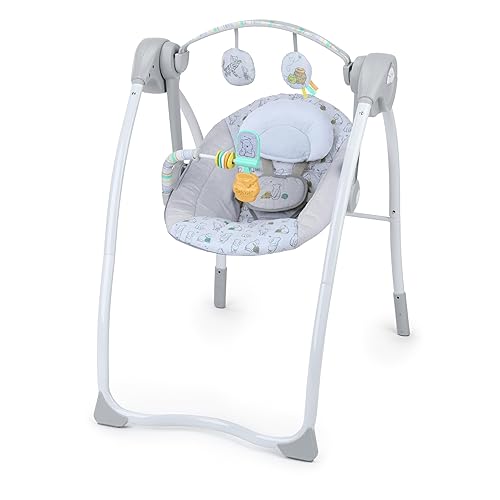
A baby swing is a seated device that gently moves back and forth or side to side. Most have a reclined seat, a harness, and a motorized or manually wound mechanism. A baby walker is a wheeled frame with a fabric seat that hangs from a tray, letting a baby sit upright and push with their feet. The two are often confused, but they are regulated and used differently.
Swings are generally designed for infants who can hold their head up without help, while walkers are meant for babies who can sit unassisted and push with their legs. Understanding that difference is the first step to choosing well.
Key differences at a glance
| Feature | Baby swing | Baby walker |
|---|---|---|
| Movement | Rocking or swaying in a seat | Wheeled, moved by the baby’s feet |
| Typical starting age (per manufacturer guidance) | Often from birth, with a reclined seat | Usually from around 6 months, once the baby sits well |
| Main purpose | Soothing and calming | Play, exploration and leg activity |
| Main risk to watch | Positional concerns and unsupervised sleep | Stairs, hot surfaces and tipping |
Step 1: Check the Age and Weight Limits
Every baby walker and swing comes with age and weight limits from the manufacturer. Read them before anything else, because they are set based on testing for stability and harness performance. Infant seats and swings typically list a maximum weight, often around 20 to 25 pounds depending on the model, and some walkers list a height limit as well. Check the label on the product itself and the manual.
If your baby is close to the upper limit, stop using the product even if they seem comfortable. Strength and balance matter more than size alone.
Step 2: Confirm Your Baby Is Developmentally Ready
Readiness matters more than the calendar. For a swing, your baby should be able to keep their head and neck steady in the seat. For a walker, your baby should sit upright unsupported for a sustained period and be able to push with their legs. Pediatric guidance generally discourages using walkers before a baby can sit independently, because a walker can let a baby reach places they cannot yet safely manage.
- Head and neck control: strong enough to hold the head steady when upright
- Sitting balance: sits without support for several minutes at a time
- Leg strength: pushes with feet and bears some weight on the legs for walkers
- Harness fit: straps sit snugly without pinching or gaps
If you are unsure whether your baby is ready, ask your pediatrician. This is a general guideline, and individual development varies.
Step 3: Choose the Right Setting for Each Product
Setting up a baby swing
- Place the swing on a flat, level floor away from stairs, windows with cords, and heaters.
- Use the recline position recommended for your baby’s age and head control.
- Fasten the harness every time, positioned at the shoulder height the manual specifies.
- Keep the swing away from kitchen counters, tables and anything the baby could pull toward them.
Setting up a baby walker
- Clear a flat, enclosed area with no stairs, sharp corners or hot surfaces within reach.
- Adjust the seat height so the baby’s feet can touch the floor and push comfortably.
- Check that the tray and seat lock securely before each use.
- Supervise closely at all times. A walker can move faster than most parents expect.
Step 4: Apply Core Safety Rules
Safety guidance for both products is consistent across major manufacturers and child safety organizations. The most important rules are simple, and they prevent most serious incidents.
- Never leave a baby unattended in a swing or walker, even for a moment.
- Do not use a swing or walker as a sleep space. Move the baby to a firm, flat sleep surface, such as a crib or bassinet, when they fall asleep.
- Stop using a walker before your baby can pull up to standing or climb. Many parents find that is the signal to retire the walker.
- Keep walkers away from stairs, including closed gates that may not stop a wheeled frame, and from pools and bath areas.
- Check the product for recalls on the official safety site before you buy used.
Step 5: Limit Daily Use and Watch for Signs
Many pediatric sources recommend limiting time in any seated device, including swings and walkers, so babies have time on the floor to roll, reach and practice movement. Short, supervised sessions are a reasonable approach. Watch for fussiness, a stiff or arched body, or a baby who seems stuck in the seat. Those signs mean it is time for a break.
Common Mistakes to Avoid
- Using a walker too early, before the baby can sit independently.
- Leaving a baby to nap in a swing or walker instead of a flat sleep surface.
- Placing a walker near stairs or a gate you have not tested for wheeled frames.
- Ignoring the weight limit because the baby still looks small.
- Buying used gear without checking recall notices or missing parts.
- Skipping the harness or fastening it loosely.
Tips for Choosing Between a Swing and a Walker
If your baby is under six months and needs calming, a swing with a reclined seat is usually the more suitable choice. If your baby is sitting well and enjoys moving, a walker may fit better, though many families also rely on floor play, a play gym, or an activity center as a safer alternative. For a broader comparison of similar seated products, you may find Swing or Rocker for Baby (2026): Which Should You Choose? useful, and Baby Swing or Bouncer Better? Which Should You Choose? (2026) covers another common decision.
When comparing specific models, look at the weight limit, the harness system, the footprint, and how easily the seat and tray lock. Reviews of individual swings, such as Best 6 Baby Swings for Infants: Features and Limits Compared and 5 Best Baby Swings for Infants of 2026: Compared, can help you compare features side by side. For walker options, Best 12 Baby Walkers for Infants and Toddlers lists a range of styles.
Recommended gear
A few supporting items can make a baby swing or walker safer and more comfortable to use.
- Infant swing with a reclined seat and five-point harness: Look for a model with a clear recline setting, since head control varies by baby. View on Amazon
- Stair gates for the walker area: A pressure-mounted or hardware-mounted gate gives an extra barrier. Check that it is rated for the space and that the walker frame cannot slip past it. View on Amazon
- Foam floor mat: A thick play mat gives your baby a soft, supervised space to practice rolling and sitting, which complements any seated device. View on Amazon
FAQ
What age can a baby use a baby walker and swing?
Swings are often used from birth with a reclined seat, while walkers are generally recommended only once a baby can sit unassisted, usually around six months. Always follow the age and weight limits in the product manual.
Is a baby walker safer than a swing?
They carry different risks. Walkers can move quickly and reach stairs or hot surfaces, while swings are more stationary but can be misused for sleep. Both are safe when used under supervision and with the correct setup.
Can my baby sleep in a swing?
No. Babies should sleep on a firm, flat surface, such as a crib or bassinet. If your baby falls asleep in a swing, move them to a safe sleep space once you can do so.
How long can a baby stay in a walker each day?
There is no universal time limit, but short, supervised sessions are generally recommended, with plenty of floor time in between. If your baby seems tired, fussy, or stuck, take a break.
When should I stop using a baby walker?
Stop once your baby can pull up to standing, climb, or reach the weight limit. Many parents also retire walkers once the baby begins cruising along furniture.
Do baby walkers help babies walk sooner?
Walkers do not help babies walk sooner, and some pediatric sources note they may delay independent walking because babies use them instead of practicing on their own. Floor play and supervised movement are better for building leg strength.
Should I ask my doctor before using a swing or walker?
Yes, especially if your baby was born early, has a known developmental or medical condition, or has trouble with head or neck control. A pediatrician can tell you whether a particular product suits your baby.
Conclusion
A baby walker and swing each have a clear role, and the right choice depends on your baby’s age, head control, and ability to sit. Check the weight and age limits, set up the product on a flat and safe surface, and never leave your baby unattended. When in doubt, favor supervised floor time and talk with your pediatrician about what suits your child.
Ready to choose one?
About Graham Fisher
Graham Fisher is part of our editorial team and reviews and edits our baby gear guides, checking product details against manufacturer specifications and owner feedback.