By Graham Fisher
Updated November 2026
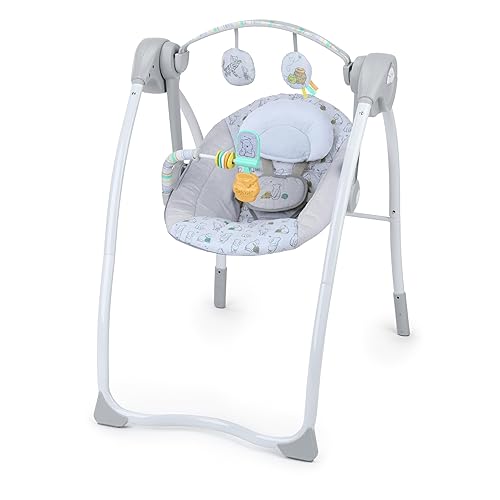
A baby swing that goes both ways moves your infant forward and back, side to side, or in a combination of both. This guide explains what the two-directional motion actually does, how to check whether a swing is suited to your baby’s age and size, and how to set one up so it runs smoothly and safely. By the end, you should be able to compare models on the specs that matter and avoid the most common buying and setup errors.
What “Goes Both Ways” Really Means
Manufacturers use the phrase to describe different motions, so it helps to be precise before you compare products. Some swings rock front to back, which many parents call the “pendulum” motion. Others move side to side, sometimes called “lateral” or “sway.” A third type combines both, usually by using a rotating or multi-axis frame. When a product page says a swing goes both ways, check whether it means both directions at once, or whether the user can toggle between two modes.
Shopping for one? See our guide: 5 Best Baby Swings for Infants of 2026: Compared.
Both motions use the same basic physics: a swinging seat on a frame with a motor or spring mechanism. The difference is in the frame geometry and the pivot points. Front-to-back swings tend to have a longer arc and a more pronounced rocking feel, while side-to-side designs often sit lower and produce a gentler sway. Combination swings try to offer both, but the compromise is usually a larger footprint.
Step 1: Confirm the Swing Suits Your Baby’s Age and Weight
Before comparing features, check the manufacturer’s stated limits. Most infant swings list a maximum weight, commonly somewhere in the low to mid 20-pound range, and a minimum age or weight for use with the seat in its reclined position. Stop using the swing once your baby reaches the stated weight limit or begins trying to sit up and climb out, whichever comes first.
Newborns need a fully supported, reclined position with a harness. Look for a swing that offers a flat or near-flat recline setting for the earliest months, and confirm the seat insert is rated for newborns if you plan to start right away. Some parents find that a swing with two reclining positions is more useful than one with many fixed angles.
Checklist: Age and Weight Fit
- Minimum age or weight listed for the seat position you plan to use
- Maximum weight limit printed on the frame or in the manual
- Recline positions available for newborn use
- Five-point or three-point harness, correctly sized for your baby
- Insert or padding rated for newborns, if needed
Step 2: Compare the Two Motion Types
Once you know the baby fits the swing’s ratings, decide which motion you want. Infants often respond differently to each. Some calm faster with a forward-and-back rhythm, while others settle better with side-to-side movement. Since babies vary, many parents find it useful to look for a model that lets them switch between motions rather than committing to one.
| Feature | Front-to-back swing | Side-to-side swing | Both directions (combination) |
|---|---|---|---|
| Typical motion | Pendulum rocking | Lateral sway | Both, often selectable |
| Footprint | Usually compact | Often low and wide | Generally larger |
| Space needed | Clearance at the front and back | Clearance on both sides | Clearance in all directions |
| Best for | Parents who want a long arc | Parents with narrow rooms | Families testing what calms baby |
| Watch for | Tipping if placed on uneven floors | Sway may be less soothing for some | Heavier, harder to store |
Step 3: Check the Motor, Speeds and Power Options
Most two-directional swings have a motor with several speed settings and a timer. Check how many speeds are offered and whether the timer shuts off automatically. Some models run on batteries, some on an AC adapter, and some accept both. A battery-powered unit is convenient during travel, but battery life varies with speed and how often the swing runs. If the manual lists an adapter, confirm it is included and that you have an outlet within reach of the swing’s placement.
Look at the noise level as well. Owners often report that some motors hum or click at higher speeds. Starting with the lowest setting and listening for a few minutes in the store, or reading owner reviews that mention noise, can help you avoid a unit that irritates light sleepers.
Step 4: Set Up the Swing for Safe, Smooth Motion
Placement determines how well a two-directional swing performs. Follow these steps when you set it up:
- Place the swing on a flat, level surface with no rugs or cords that could catch the frame.
- Leave clearance around the full arc in every direction you plan to use. Measure the path of the seat and keep furniture and walls outside it.
- Keep the swing away from windows with blind cords, and away from any hanging cords or objects within reach of the baby.
- Assemble the frame exactly as the manual describes, and check that all locking pins or latches are fully engaged.
- Run the swing empty for a few minutes on each setting to confirm the motion is stable and nothing wobbles.
- Secure the harness, placing the buckle and straps as directed, and confirm the fit snugly against your baby’s body.
Tools and Supplies You Might Need
- A tape measure to check clearance around the arc
- The manual, kept nearby for weight limits and harness instructions
- A level surface or floor mat if your floor is uneven
- A cord management clip or tie for any power cable
Step 5: Use the Swing Safely Every Time
Even a well-built swing requires supervision. Never leave a baby unattended in a swing, and do not use it as a substitute for a crib or bassinet. Turn off the motor when you are not using it, and avoid leaving the timer running with the baby asleep unless the manual specifically allows it. Many infant safety guidelines recommend moving a sleeping baby to a flat, firm sleep surface rather than letting them nap in a reclined swing. If your baby has reflux, breathing concerns or any health condition, talk with your pediatrician before using a swing for regular sleep or long periods.
Common Mistakes
- Buying for a future size: Choosing a swing based on how big your baby will become can mean using it past its weight limit or in a position it isn’t rated for.
- Skipping the clearance check: A swing that rocks in both directions needs room to move. Parents often discover too late that the arc hits a wall or a sofa.
- Ignoring the harness: Loose straps or a harness set to the wrong height reduce protection. Check the fit every time you put the baby in.
- Using the swing for sleep: A reclined swing is not a safe sleep surface. Move the baby to a crib or bassinet once they are drowsy.
- Running the motor on high all the time: Owners often report that the lowest speed works just as well for settling, and it may extend battery life and reduce noise.
Tips for Getting the Most from a Two-Way Swing
- Test both motions when your baby is calm and alert, and note which one they watch or settle to more easily.
- Use the timer for short sessions at first, then adjust based on how your baby responds.
- Keep a spare set of batteries or the adapter in the same place so you can run the swing without hunting for power.
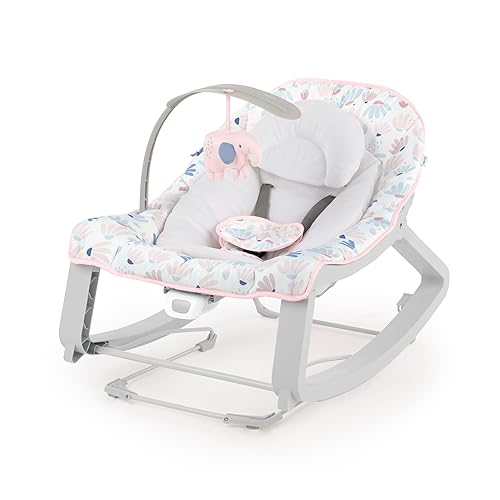
- If you use the swing alongside other baby gear, such as a carrier or bouncer, compare how each supports your baby’s comfort. Our guide to Swing or Rocker for Baby (2026): Which Should You Choose? covers how these two motions differ in practice.
- Check your swing’s recline and harness settings every few weeks as your baby grows.
Recommended gear
Good placement and a stable base matter more than accessories, but a few items can make a two-directional swing easier to run and store.
- A low-pile or thin floor mat: A firm, level mat can help a swing with a wide footprint sit steady on carpet. View on Amazon
- A cord clip or cable organizer: Keeping the power cord off the floor reduces tripping and keeps the cable away from curious hands. View on Amazon
- A portable timer or outlet with timer: If your swing’s built-in timer doesn’t match your routine, a separate timer can handle power cycling. View on Amazon
FAQ
Is a baby swing that goes both ways better than one that only goes one way?
Not necessarily. The best choice depends on how your baby responds and how much space you have. Two-directional swings give you options, but they are often larger and heavier. If your baby calms quickly with one motion, a single-direction swing may be easier to live with.
At what age can my baby use a swing?
Age guidance varies by manufacturer, and many swings specify a minimum weight rather than an age. Check the label and manual for the reclined newborn position, and confirm the harness and insert are rated for your baby’s current size.
How long can my baby stay in the swing?
Many pediatric sources recommend limiting time in any infant seat or swing so that your baby has plenty of floor time for movement and play. Use the swing for short, supervised periods, and move your baby to a flat surface for sleep.
Can my baby sleep in the swing?
Safe sleep guidance generally recommends a firm, flat sleep surface such as a crib or bassinet. If your baby falls asleep in the swing, move them to that surface once they are drowsy or asleep. Talk with your pediatrician if you have concerns about sleep or reflux.
Do two-way swings need to be bolted to the floor?
Most do not, but they should sit on a level surface and not be placed on tables or raised platforms. Follow the manufacturer’s placement instructions and keep the swing clear of anything that could tip it.
How do I know if the motion is too fast for my baby?
Watch your baby’s face and body. If they look startled, fuss, or arch their back, lower the speed or stop the motion. Starting on the lowest setting and increasing slowly helps you find a comfortable pace.
Should I check the manual before the first use?
Yes. Manuals list weight limits, harness steps, recline positions and cleaning instructions that differ from one model to another. Keep the manual somewhere you can find it, and reread the safety section if you change the setup or add accessories.
When should I ask a professional for help?
If your baby has reflux, breathing problems, low muscle tone, or any other health concern, consult your pediatrician before using a swing regularly, especially for sleep. A physical therapist can advise if you have questions about positioning for development.
Conclusion
A baby swing that goes both ways can give you more ways to settle your baby, but only if the weight rating, harness and clearance all match your situation. Confirm the age and weight limits first, decide which motion suits your baby, and set the swing up on a level, clear surface. Keep supervision constant, and move your baby to a flat sleep surface whenever they nap.
Related reading
- Vaude Swing Baby Carrier Review: Fit, Features and Safe Use
- Best 6 Baby Swings for Infants: Features and Limits Compared
- Baby Swing or Bouncer Better? Which Should You Choose? (2026)
- Mother's Choice 3 Way Baby Carrier Review: Fit, Positions and Who It Suits
- Combi 4 Way Baby Carrier: How to Choose and Use One Safely (2026)
- Big Dog in Baby Carrier: How to Pick a Carrier That Fits Both of You (2026)
Ready to choose one?
About Graham Fisher
Graham Fisher is part of our editorial team and reviews and edits our baby gear guides, checking product details against manufacturer specifications and owner feedback.