By Graham Fisher
Updated November 2026
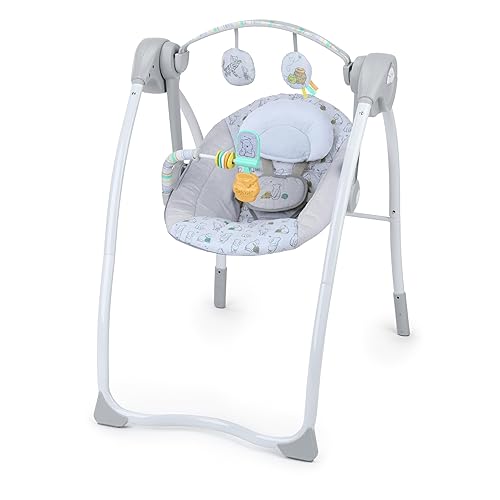
A baby swing rated to 30 lbs is designed to hold an infant up to that weight, but the number on the label is only part of the picture. This guide explains what the 30 lb limit covers, how to check a specific swing’s manufacturer specs, and how to decide when your baby has outgrown it. You will also see the safety habits that matter as much as weight does.
What the 30 lb Weight Limit Actually Means
When a manufacturer lists a 30 lb maximum for a baby swing, that figure is the highest weight the seat and frame are tested to support under the company’s own test conditions. It is not a suggested target for most babies, and it does not mean every child at 30 lbs will be comfortable or safe in the seat. Many infant swings are also limited by height, so a child can reach the weight cap while still being too long for the seat.
Owners often report that swings feel crowded well before the stated maximum, especially when a baby begins pushing up with their legs or arching their back. Those signs matter more than the number alone.
Weight Limit vs. Height Limit
Most swings list both a weight and a height limit in the owner’s manual. Check both. A baby who is under 30 lbs but has reached the height cap should stop using the swing, and so should a baby who has reached the weight cap but still fits in the seat with room to spare. Whichever limit comes first is the one that applies.
Step 1: Find the Official Limits for Your Swing
Labels and packaging sometimes differ from the owner’s manual, so start with the source document for your exact model. Look for these details:
- The maximum weight, usually written in pounds and kilograms.
- The maximum height or length, often given in inches.
- Any minimum age or weight for use, especially for newborn-only inserts.
- Whether the seat uses a built-in recline setting that changes the limits.
- Any warnings about using the swing for sleep, which most manufacturers prohibit.
If you cannot find the manual, search the brand name and model number on the manufacturer’s site. Keep a photo of the label showing the model and date code in case you need it later.
Step 2: Weigh Your Baby Accurately
Parents often guess their baby’s weight from the last pediatric visit, which can be several weeks old. Infants can gain quickly, so the number you remember may be outdated. Use your pediatrician’s most recent measurement or a home scale if you have one that is accurate. Weigh yourself holding the baby and subtract your own weight to get a rough figure, though a clinic scale is more reliable.
Signs Your Baby Is Near the Limit
- Their head or feet touch the ends of the seat or the frame.
- The harness straps sit flat against the shoulders with no slack, even at the tightest setting.
- The seat bends or sags more than it did when you first set it up.
- Your baby pushes up or slides down and is no longer held in a secure position.
Step 3: Check the Harness and Straps
Once your baby is close to the weight limit, check the restraint system every few days. The harness should be snug enough that you cannot pinch extra webbing at the shoulder. Buckles should latch fully and stay closed when you tug them gently. If any strap is frayed, stretched or has a broken clip, stop using the swing until the manufacturer confirms a replacement part.
Never add padding, positioners or aftermarket inserts that were not sold for that model. These can shift the baby into an unsafe position or change how the harness fits.
Step 4: Move Your Baby to the Right Next Product
When your baby reaches the height or weight limit, the next step depends on what you already own. Some families move to a bouncer, a toddler seat or a floor play space. Others use a stationary activity center. The key is to stop using the swing rather than letting the baby stay in it past the limit.
If you are still deciding which type of seat fits your baby’s age and needs, it helps to compare options first. Swing or Rocker for Baby (2026): Which Should You Choose? explains how the two motions differ, and Baby Swing or Bouncer Better? Which Should You Choose? (2026) covers when a bouncer makes more sense.
Compare Swing Features Before You Replace It
Not every swing with a similar weight rating works the same way. Some have a higher height cap, a wider seat or a longer lifespan. The table below shows the points to compare on the spec sheet.
| Spec to check | Where to find it | Why it matters |
|---|---|---|
| Maximum weight | Owner’s manual and label | Sets the upper safety limit for the seat and frame |
| Maximum height | Owner’s manual | Can end use before the weight limit is reached |
| Recline positions | Product specs | Affects how upright a newborn sits |
| Seat width | Product specs | Determines how much room a growing baby has |
| Power source | Product specs | Battery or AC power changes the swing’s stability and cost of use |
| Replacement parts | Manufacturer website | Matters if a strap or clip wears out |
Reviewing these details side by side makes it easier to see whether a swing will last until your baby reaches its limits. Best 6 Baby Swings for Infants: Features and Limits Compared and 5 Best Baby Swings for Infants of 2026: Compared go deeper into how these specs differ across models.
Common Mistakes
- Using the swing past the weight or height limit. The stated limit is the tested limit. Going past it can damage the frame and make the seat unstable.
- Relying on an old weight. Babies gain weight quickly. Check the scale each time you reach a new milestone.
- Letting the baby sleep in the swing. Manufacturers warn against this for good reason. Move a sleeping baby to a flat, firm sleep surface.
- Ignoring wear and tear. A swing that has been used for many months may not perform as rated, so inspect it regularly.
- Adding after-market accessories. Unapproved mats or covers can change how the harness fits.
- Assuming a weight limit applies to every position. Some swings have different limits for different recline settings or inserts. Read the manual for each setting.
Tips for Safe Use
- Use the harness every time, even for short periods.
- Place the swing on a level floor away from stairs and counter edges.
- Keep cords and mobiles out of reach once your baby can push up or reach.
- Stop using the swing as soon as your baby can climb out or sit up without support.
- Write down the weight and height limits on a note inside the cabinet or on your phone.
Recommended gear
A few accessories can help you check fit and keep the swing in good condition, though none of them should change the manufacturer’s limits.
- Infant digital scale: A simple way to track your baby’s weight between pediatric visits so you know when the seat’s limit is approaching. View on Amazon
- Replacement harness pads from the original manufacturer: Only use parts sold for your exact model, since third-party inserts can affect how the harness fits. View on Amazon
- Tape measure: Helpful for checking seat width and length against your baby’s size and the height limit in the manual. View on Amazon
FAQ
Can a baby use a swing rated 30 lbs once they weigh 30 lbs?
Once a baby reaches the stated maximum weight, the swing should no longer be used. The limit is set by the manufacturer’s testing, so going over it is not recommended.
Does the weight limit mean my baby is safe at 25 lbs?
Being under the weight limit is necessary but not enough on its own. Check the height limit, the harness fit and the seat condition as well.
How do I know if my baby is too tall for the swing?
If your baby’s head, neck or feet are pressed against the ends of the seat, or if the harness cannot be fastened securely, the baby is likely too tall even if the weight is below the limit.
Can I use a swing for naps?
Most manufacturers recommend against letting babies sleep in swings. Move the baby to a firm, flat sleep surface when they fall asleep.
What if the swing’s weight limit is not printed on the seat?
Check the owner’s manual or the manufacturer’s website using the model number. Do not rely on memory or on a limit you found for a different model.
Should I ask my pediatrician about the swing?
Yes, especially if your baby has reflux, low muscle tone or other health concerns. A pediatrician can advise on how long and how often a swing is appropriate for your child.
Where can I get the official weight rating for an older swing?
Contact the manufacturer with the model name and date code, or check the product page on the brand’s website. Keep the original box or manual if you have them.
Conclusion
A baby swing 30 lbs rating tells you the tested weight limit, but height, harness fit and seat condition matter just as much. Confirm the limits in your model’s manual, weigh your baby with an accurate scale and inspect the harness regularly. When your baby reaches a limit, move them to a different seat rather than stretching the swing’s use.
Related reading
- Vaude Swing Baby Carrier Review: Fit, Features and Safe Use
- Buying Secondhand Baby Gear: What Is Fine and What to Avoid
- Best Baby Gates for Stairs and Doorways: 7 Models Compared
- Best Baby Bouncers for Soothing and Play: 7 Models Compared
Ready to choose one?
About Graham Fisher
Graham Fisher is part of our editorial team and reviews and edits our baby gear guides, checking product details against manufacturer specifications and owner feedback.