 By Graham Fisher
Updated November 2026
High chair space saving comes down to choosing a design that folds, slides or stores flat, then placing it so it doesn’t block walkways or crowd your table. This guide walks through how to measure your space, pick the right type of high chair and set it up so it stays out of the way when you’re not using it. Most of the decisions come down to footprint, folding action and where the chair will live between meals.
Measure the Space Before You Shop
Start with the spot where the chair will sit most of the time, not the spot where it will be stored. Measure the floor footprint, the clearance behind the chair for a parent to pull it out, and the height from the floor to the bottom of the table. Many manufacturers list the folded and unfolded dimensions in the product specifications, so compare those numbers against your measurements rather than guessing from photos.
Shopping for one? See our guide: Stokke Tripp Trapp High Chair Review (2026).
- Floor footprint at the feeding spot (width by depth)
- Clearance behind the chair so the tray and seat can be reached
- Table height and the gap between the tray and table edge
- Storage spot, such as a hall closet or corner, with its width and depth
Choose a Design That Folds or Stores Flat
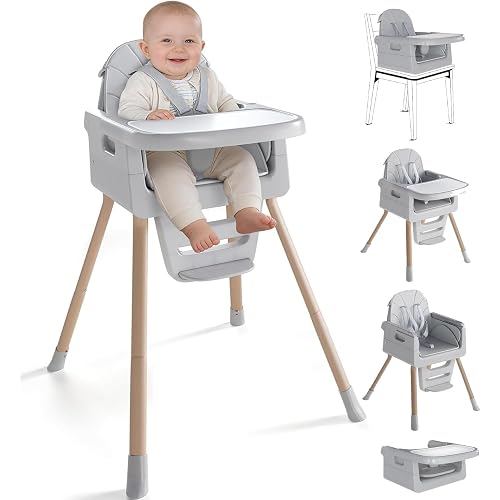
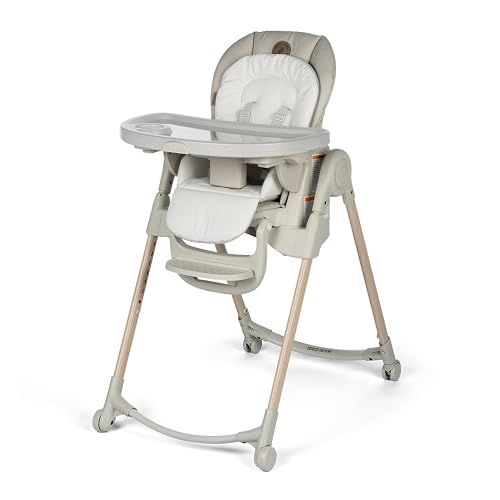
Folding frames are the most common space-saving option. Look for a fold that collapses the seat and tray into a narrower profile, and check whether the tray must be removed first, which adds steps every time. Some models fold flat enough to lean against a wall. If you want to know how different categories compare, the guide on High Chair Types: Full-Size, Convertible, Portable and Booster covers the trade-offs in more detail. A related read: Best High Chairs.
Compact designs also work well in tight kitchens. The Fisher Price High Chair Spacesaver: Fit, Setup and Buying Tips (2026) article shows how a slim-profile design fits into narrow dining areas, while the Baby Gear for Small Spaces guide covers other items that help when floor room is limited.
Consider Hook-On and Table-Mounted Options
If your table is sturdy and you have little or no floor space to spare, a hook-on chair removes the base entirely. These clamp to the table edge and fold away when not in use. They work best with solid tables that have a thick, flat edge, and they are not suitable for every table shape. Check the manufacturer’s weight limit and table thickness range before buying, and confirm the clamp won’t damage a finish or a glued joint.
Booster-style seats are another route. A booster that sits on a dining chair takes almost no floor space, but it only suits babies who can sit upright unassisted. The Booster Seat Guide: High-Back vs Backless and When to Switch article explains when a child is ready to move from a high chair to a booster.
Plan Where the Chair Lives Between Meals
A space-saving chair only saves space if you can store it quickly. Pick a spot near the table so you aren’t dragging it across the room. A wall corner, behind a door or inside a closet with a clear front works well. Keep the storage spot clear of the pathways you use most, and make sure the chair can be pulled out without knocking into anything.
- Clear the storage spot and confirm the folded dimensions fit.
- Test the fold and unfold motion once before the first meal.
- Keep the tray and any removable parts in the same place each time.
- Wipe the frame and buckles before folding so crumbs don’t collect in the hinges.
Common Mistakes
- Measuring only the open chair and forgetting the folded size.
- Assuming any hook-on chair will fit any table edge.
- Choosing a folding design that is hard to operate with one hand.
- Storing the chair in a spot where it blocks a door or hallway.
- Skipping the weight limit and recline or height settings listed by the manufacturer.
Recommended Gear
A slim, compact floor chair with a simple fold is the most direct way to save floor space. Search for compact folding high chair to compare models that collapse flat. View on Amazon
A table-edge clamp chair suits homes with a sturdy table and very little floor room. Search for hook on high chair to see options that clip on and fold away. View on Amazon
A wall-mounted or hanging storage hook keeps a folded chair off the floor when it isn’t in use. Search for high chair wall storage hook to find options that fit a standard wall stud. View on Amazon
FAQ
Is a hook-on high chair safe for every table?
No. Hook-on chairs need a solid table with a thick, flat edge that falls within the manufacturer’s listed range. Check the weight limit and table thickness specs, and do not use one on a glass or light pedestal table.
Do folding high chairs fold small enough for a closet?
Many do, but folded sizes vary a lot. Compare the folded width, depth and height from the manufacturer specifications against your closet opening before buying.
When can my child stop using a high chair and switch to a booster?
Most children move to a booster once they can sit upright without support and reach the table comfortably. Confirm readiness with your pediatrician, and follow the weight and height limits in the booster’s instructions.
Conclusion
Good high chair space saving starts with measuring the feeding spot and the storage spot, then choosing a design that folds, clamps or stores flat. Test the fold, plan the storage location and avoid the common mistakes above. With those steps, you can keep your dining area open without giving up a safe, comfortable place for your baby to eat.
Related reading
- Wooden High Chair Newborn: When to Use One and How to Set It Up Safely
- Wood High Chair Eddie Bauer: How to Choose the Right Model (Setup Tips)
- Peg Perego Prima High Chair (2026): Which Should You Choose?
- Office Chair with High Backrest (2026): Which Should You Choose?
- OXO Tot High Chair Sprout: Setup, Fit and Buying Guide (2026)
- Joovy High Chair Nook: Setup, Fit and Buying Guide (2026)
Ready to choose one?
About Graham Fisher
Graham Fisher is part of our editorial team and reviews and edits our baby gear guides, checking product details against manufacturer specifications and owner feedback.





Write Your Review
No reviews yet. Be the first to share your experience!