By Graham Fisher
Updated November 2026
A newborn baby carrier from Kmart can work well for everyday carrying, provided you check the newborn fit, head and airway support, and the carrier’s age and weight limits before you buy. This guide walks you through what to look for, how to confirm a carrier suits a newborn, and how to use it safely from the first days home.
Step 1: Confirm the Carrier Is Rated for Newborns
Many carriers sold as “all-in-one” or “from birth” are only safe for newborns when used with an insert or a specific seat setting. Read the manufacturer’s label for the minimum weight and the lowest age it supports. Some models list a newborn minimum of around 3.5 kg (about 7.7 lb), while others start later. If the label does not state a newborn minimum, treat the carrier as unsuitable for a newborn until you confirm otherwise with the brand.
Shopping for one? See our guide: 7 Best Baby Pouch Carrier Newborns for Early Days (2026).
Step 2: Check Newborn Support and Fit
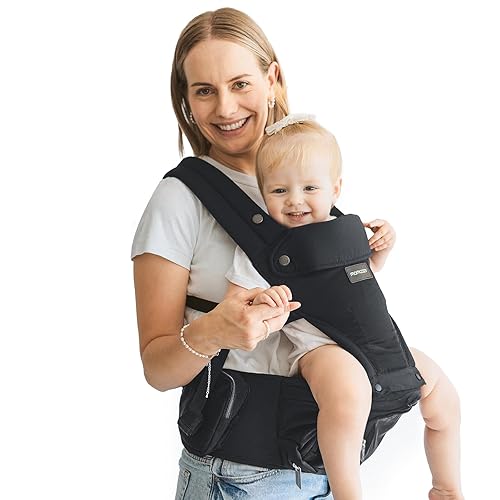
A newborn needs full head and neck support and a chin-to-chest gap that keeps the airway open. Look for these features:
- A newborn insert or inner panel that raises the baby and supports the head
- Adjustable straps that let you bring the baby close to your chest
- A seat base that holds the baby in an upright, M-shaped position with knees above the bottom
- A structured or padded back panel that keeps the baby’s spine supported
Before using any carrier, test the fit with a doll or with a supportive adult helper beside you. Check that you can see the baby’s face at all times.
Step 3: Learn the Safe Positioning Steps
Follow these steps every time you use the carrier with a newborn:
- Make sure the carrier is snug and the baby sits high enough to kiss without you bending your head.
- Place the baby in the M-position with the head supported and the chin off the chest.
- Keep the baby’s face uncovered and in view, with nothing blocking the nose or mouth.
- Check the fit again after you adjust the straps, since loose straps can let the baby slump.
- Recheck the baby every few minutes, especially after you sit down or lean forward.
For more detail on timing and setup, see When to Wear Baby Carrier: A Step-by-Step Guide for Newborns and Beyond. If you are weighing a wrap instead of a structured carrier, Newborn Baby Wrap Carrier: How to Choose, Wrap and Use It Safely covers wrap-specific technique.
Step 4: Compare Carrier Types That Fit Newborns
Kmart-style carriers come in a few formats. Each has trade-offs:
| Carrier type | Newborn suitability | Best for |
|---|---|---|
| Structured soft carrier with insert | Good, when the insert is used | Daily errands and longer walks |
| Pouch or sling | Good, with careful positioning | Early weeks and quick carries |
| Wrap | Good, with practice | Snug, close contact |
| Carrier without a newborn insert | Often unsuitable | Older babies only |
If you are comparing specific models, Infantino Baby Carrier Newborn Insert: How to Use One Safely (Step-by-Step) and Kangaroo Baby Carrier Newborn: 6 Best Picks Compared (2026) give useful examples of insert-based designs.
Common Mistakes to Avoid
- Using a carrier without a newborn insert, or with the insert removed too early
- Letting the baby’s chin drop toward the chest
- Tightening the straps only once and never checking again
- Covering the baby’s face with a blanket or hood while the carrier is in use
- Assuming a carrier is safe because it is sold at a large retailer
Recommended Gear
A newborn insert designed for your specific carrier is the most important accessory. Look for the brand’s own insert rather than a generic cushion.
A small mirror or a second adult to check positioning can help you confirm the baby’s face stays clear during the first weeks. Use the feedback you get to adjust the straps.
A simple breathable wrap can give you a second option for closer carrying once you are comfortable with the basics. View on Amazon
FAQ
Can I use a Kmart baby carrier for a newborn right away?
Only if the carrier’s label or instructions state that it is suitable for newborns, and you use any required insert. If the label does not say so, check with the manufacturer before using it.
How do I know if the baby’s airway is clear?
You should be able to fit at least two fingers between the baby’s chin and chest, and the nose and mouth should be visible. Check often, especially when the baby is sleeping.
When should I see a professional about carrier use?
If you have questions about your baby’s breathing, weight, or development, talk to a pediatrician or a certified baby carrier educator before you continue using the carrier.
Conclusion
A newborn baby carrier from Kmart can be a practical choice when it has a newborn insert, supports the head and airway, and fits snugly. Follow the positioning steps each time, recheck the fit often, and confirm the newborn rating before you buy. When in doubt, consult your pediatrician.
Ready to choose one?
About Graham Fisher
Graham Fisher is part of our editorial team and reviews and edits our baby gear guides, checking product details against manufacturer specifications and owner feedback.